‘The Role of Friendship in Participatory Design’ – by John K.C. Liu -Taipei – 2021

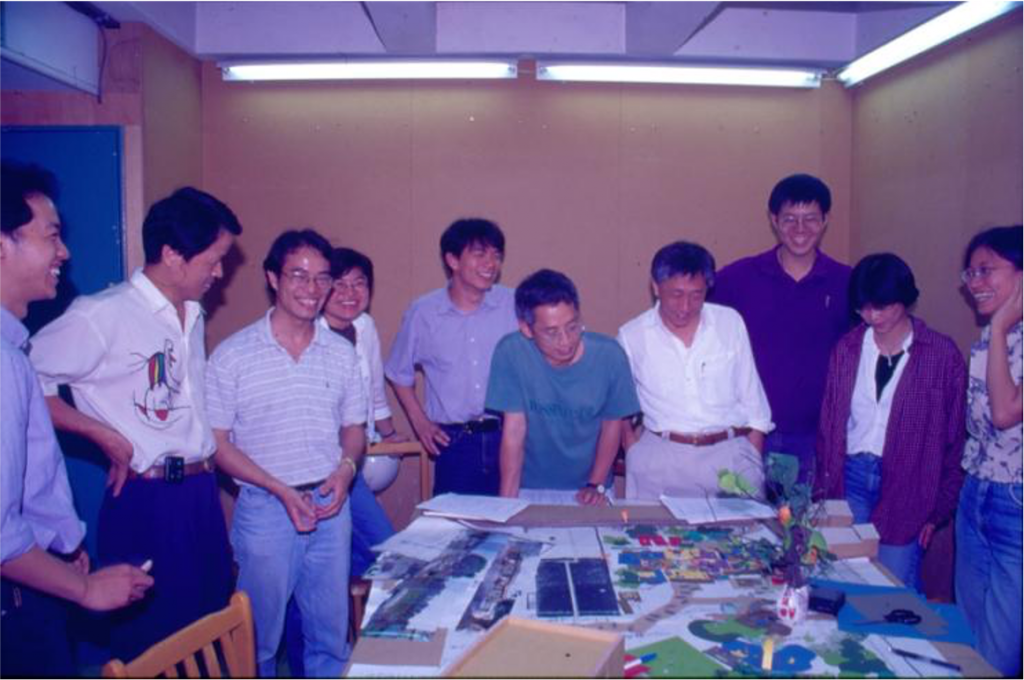
Prof. John KC Liu ( 4th from right ) with NTU Design Team

Making friends in my line of work as a community designer is so obvious and natural that sometimes it escapes notice, until a wise old man reminds me to pay attention. Billy asked me to write a piece about friendship and community design and it dawns on me that in most instances, friendship in the community is an integral part of engaging the community in identifying problems, finding alternatives and deciding on solutions, what I call participatory design.

One example is the design of a neighborhood park in a very densely populated district in Taipei. Along with my students from the National Taiwan University, we came upon an abandoned site turned into a neighborhood garbage dump. We discovered that this site is a designated location for a neighborhood park but due to disagreements over its design, it had been vacant for many years without a solution. Two factions of the community were constantly at odds over large and small issues. The students saw an opportunity and took on the challenge of engaging the opposing groups of residents. Initially they established an after-school store-front workshop across the street from the site where school children could come to do their homework tutored by the NTU students. Of course both parents and school children were enthusiastic with this opportunity and after our NTU students had become familiar with all the neighborhood school children, a site cleaning party was organized. The event was planned and carried out by the collaboration of the NTU students and the local school children. The event was a success ending with a neighborhood party on the cleaned site. Because school children from both factions of the neighborhood were actively engaged, their respective family members all came out for the party. All agreed that cleaning out this eyesore was a positive step taken by the community. As a result, previous tensions between opposing factions began to ease.

Following this initial action, NTU students, along with interested local school children, began to plan for the future park. Aware of the differences that existed in the neighborhood, the group had to devise activities that would bring people together, not necessarily to agree, but to engage. One of the first activities was to ask people in the community to identify places which they either like or dislike by the use of instant cameras to record. By soliciting over a hundred responses from old people, young people, housewives and shopkeepers, a photo exhibit of the responses were held on site for all to see. Photos of likes and dislikes were grouped separately and the effect of the display was amazing in that people of opposing factions suddenly realized their values about the qualities of the neighborhood environment are much more similar and close to each other rather than different. People from opposing factions began to talk to each other for the first time, discussing shared opinions and some differing viewpoints. Suddenly, the community seemed to come alive with talk and chatter. They began to find out about each other, about family, about who knows whom, about kids’ schooling, about buying groceries. Small talk about daily life led to friendship across factions and cliques. There was the beginning of a new energy in the community that was previously absent. Along the way the NTU students became friends with the families in the surrounding neighborhood, often being invited home for meals and to serve as big brothers and sisters to the school kids.

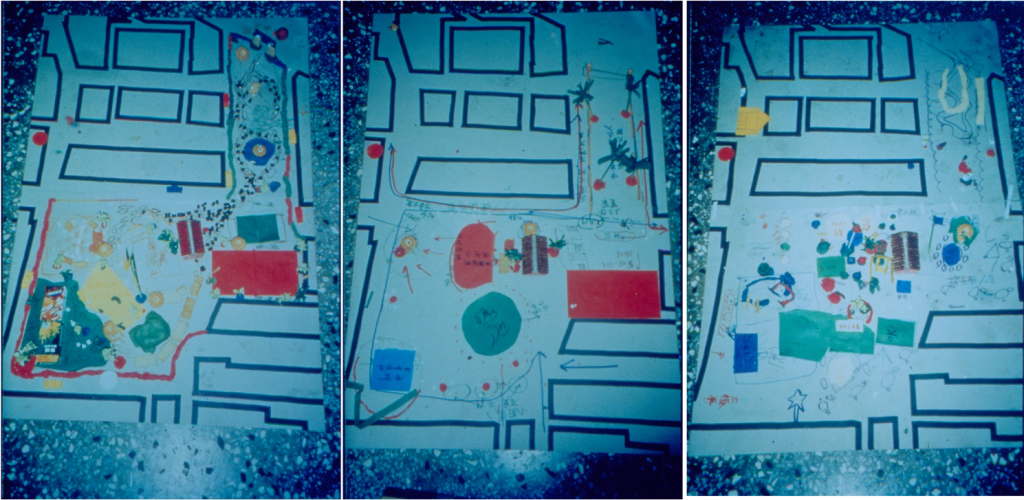
At this point NTU students felt that the community was ready to engage in conversations about the future of the park site. Again, activities with school children led the way, including collaborative drawings of an ideal park where two or three kids worked out shared ideas and discarded conflicting proposals. This helped to build trust and mutual reliance which strengthened the friendships in formation. Other activities such as interviews with elderly people were undertaken to gather ideas about the needs and wants of the older generation. For example, one very specific and widely shared idea was that older people like to watch what younger people and kids are doing, rather than being separated and secluded. This became one of the important guidelines to the design of the park.

Neighborhood people were then organized into three groups to participate in the actual design of the park. Old people, women and young people formed design teams assisted by the NTU students. Each team proposed a design scheme for the park and a neighborhood preference poll was taken to decide which scheme would be selected.

Unexpectedly some elderly folks objected to counting young people’s votes because they thought that young people are only kids and should not be allowed to participate in serious matters of decision making. Their reasoning was that it is O.K. for young people to make a design proposal, but that the decision should be left to the adults. This sudden turn of events caused confusion among all participants and accusations of procedural shortcomings and age discriminations, etc. began to split the community apart.

At this point the NTU students realized that the impasse between generations would need some time to resolve. A moratorium of two weeks was called on the voting process to relax the tensions. Some way of bringing the community back together needed to be found. By considering the key accomplishment made so far, it was clear that newly formed friendships across factions was a key that could recapture the energy that was waning. For the next two weeks, the NTU students worked with adults and elderly folks to communicate the viewpoint that young people in the neighborhood had contributed responsibly to the process up to this moment and that their proposed design for the park ought to receive equal consideration, and further that the young people’s choices for the preferred design should be respected as any other resident of the neighborhood. Friendship played a critical role as people spent time discussing with family members, with new friends and with elderly people.  After two weeks, the neighborhood came together and took a preference poll again, this time with the full inclusion of the young people. A selection of the preferred design was made, to everyone’s satisfaction. With a delay of few weeks, the community gained a new understanding of making group decisions including the pros and cons of direct voting, as well as respect among generations. In addition, some of the details of what makes friendship work were also tested and refined. One such detail is trust, how one person trusts the judgments and values of others.

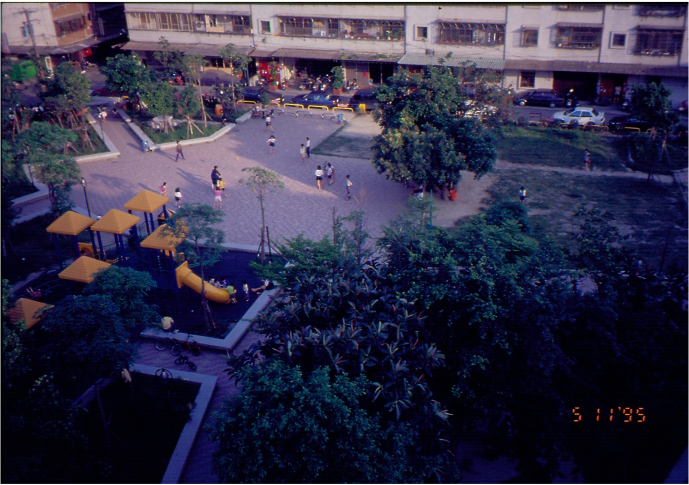
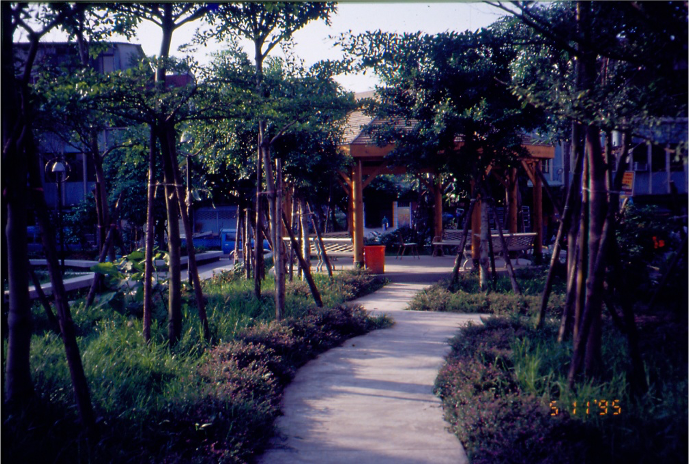
The NTU students provided the technical support to complete the project and the park was finally realized a year later. In the meantime, the residents of the neighborhood organized a park supervision committee on their own initiative, including maintenance, landscape management, safety patrol, cleaning, and conflict resolution. Bonding with neighbors and making lasting friends through the participatory process of designing the park, a sense of collective achievement was critical in sustaining the supervision committee’s work. At the opening of the park, there was a lot of media exposure of this project and many reporters were curious about what is so special about a participatory design process. The physical aspects of the park seemed ordinary enough, with playground, ball court, seating area, flowers and trees. The design of the park, on first sight, even had some awkward spots that a professional designer would not have done. So the reporters pressed me to explain.

What I said in response was: If you look carefully at what you can see, for example, the long curvilinear bench that ring the edge of the open plaza and ask how it was designed, I would say that the elderly people wanted to see small kids playing in the plaza in a safe and shaded area. The young people’s design proposal incorporated this need and designed a continuous bench which later became one of the most used features of the park. Another example is the ball court where earlier, young people wanted a full size basketball court. When adults and elderly people pointed out that a full size court takes up too much space and some of the elderly people’s needs would have to be disregarded, then the young people, on their own, decided to make only a half court instead of a full court. These kinds of dialog, give and take, among groups and between generations, could only happen is there is trust and mutual respect, and if there is self-awareness and empathy. Then I went on to remind the reporters to ask residents themselves about what is so special about this park. I said you will find what is special may be the non-physical aspects of the park. It is the social process that reversed a community in conflict and turned it into a community in cooperation. The key to this reversal is the building of friendships at the beginning of the process. It is these friendships that let to the sustainability of this park as a loved neighborhood place.

True enough, after more than twenty years since its opening, on a recent visit I found the trees have grown tall as well as the young people who have grown up to become responsible and valuable members of this community. They take pride in creating this community space through the agency of friendship. The park, in turn, provides the context for sustaining robust second generation friendships.
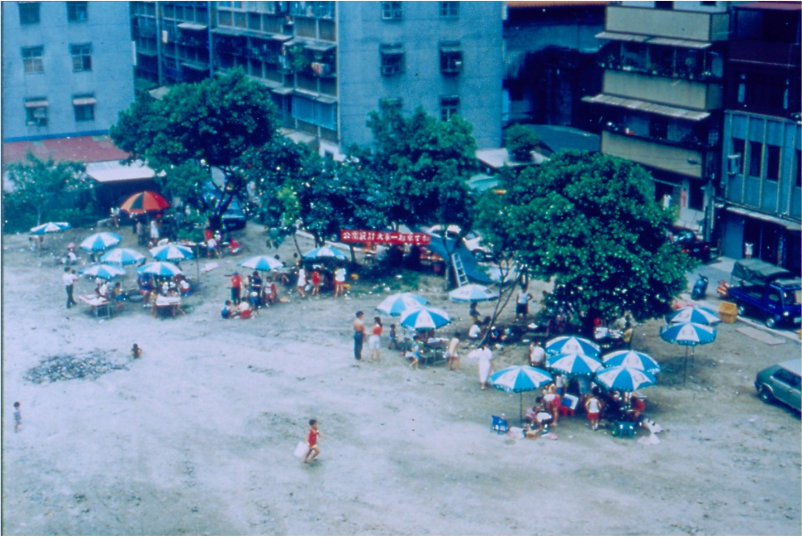
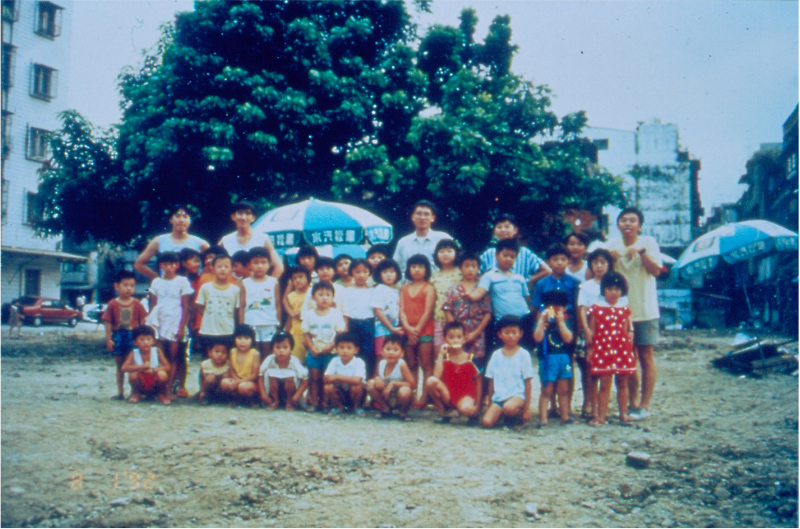
Find the best use for this site.
Participatory decision for a Children’s Park
Result of Community Participatory Deseign
A Friendly Gathering Place for both Old and Young

_____________________________________________________

John K. C. Liu – 劉可強Bio – May 2019

John K.C. Liu is currently the chairman of the Building and Planning Research Foundation (BPRF) at the National Taiwan University, of which he was the founding executive director in 1990. Over the past thirty years the BPRF has provided professional planning and design services to improve the everyday living environment of more than 500 communities. Significant projects include the Yilan Performing Arts Center, Taipei Treasure Hill Historic Village Preservation and Reuse, South-West Coastal Area Ecological Planning, Heritage Planning for the Indigenous Kochapogan settlement , and the Houpi Community Development Planning in Yilan. Specific methodologies of direct community participation have been refined through practice.

John K.C. Liu attended the Rhode Island School of Design from 1963-1965, and in 1968 received a B.Arch.from the Cooper Union in New York. In 1969 he received a M.Arch. from the University of Washington, Seattle and in 1980 a Ph.D. in Architecture from the University of California, Berkeley.

Dr. Liu’s current research and professional interests are in sustainable development and environment planning, ecological design, public facilities planning and design including theaters, museums, schools, housing, and historical heritage planning. His special expertise is in participatory community planning and design.

Dr. Liu has been a Professor in the Graduate Institute of Building and Planning at the National Taiwan University. He has also taught at the University of Washington, Seattle, the Penn State University, Tunghai and Chung Yuan universities in Taiwan, U.C. Berkeley, California, and Tsinghua University, Beijing. During 2016-2017 he was the OSM Distinguished Visiting Professor at National University of Singapore Department of Architecture.

Dr. Liu’s contributions to sustainable community development and planning have been recognized by numerous honors and awards. They include: 16th Taipei Culture Award, 2012; First Prize,Taiwan Architects Association Annual Awards, for the Yilan County Performing Arts Center, 2000; California State Asian American Association of Engineers Professional Achievement Award, 1989; State of California Affordable Housing Award, 1986; U.S. National Science Foundation Public Service Science Residency award, 1981; Progressive Architecture Awards Citation in Applied Research, 1978.

_________________________________________________

BILLY’s COMMENTS : Billy met John in 1967 as volunteers at New York Chinatown. Several young Chinese Architects and Planners formed a Group named New York Chinatown Urban Design Team. We became friends and have kept up ever since. John and wife Shirley have children in the Bay Area. They visit their children regularly and each time they come they would visit Billy and Lucille at Portola Valley – near Stanford University.
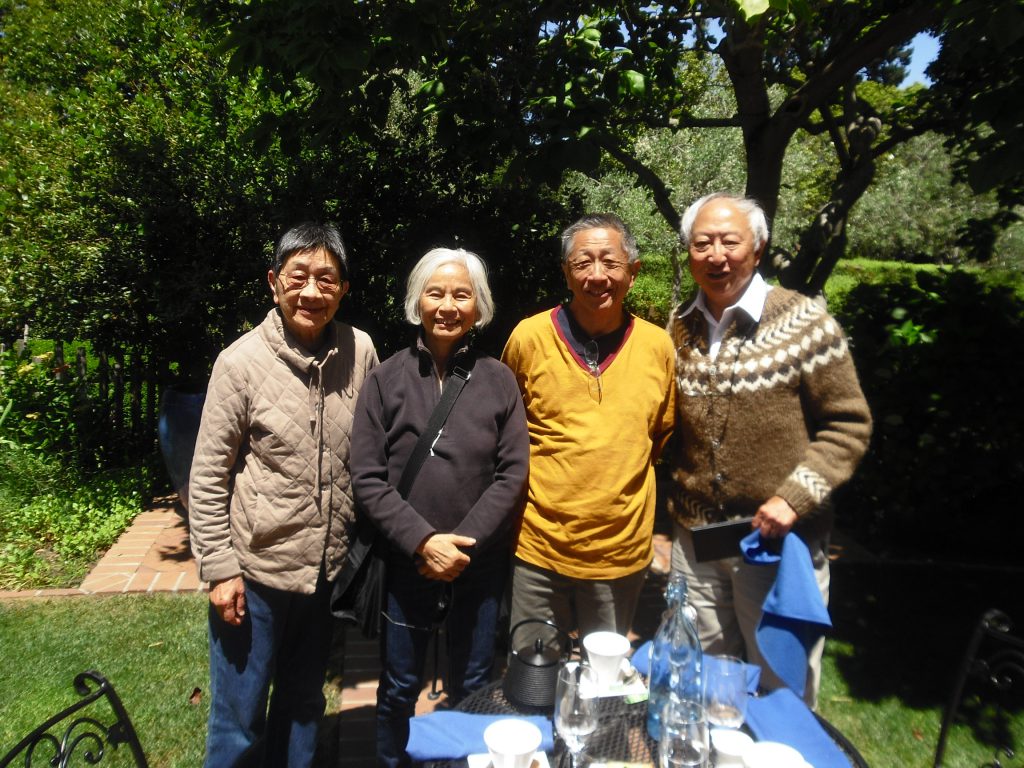
Lucille, Shirley, John, and Billy met at Portola Valley, Ca. 2020

_____________________________________________________________
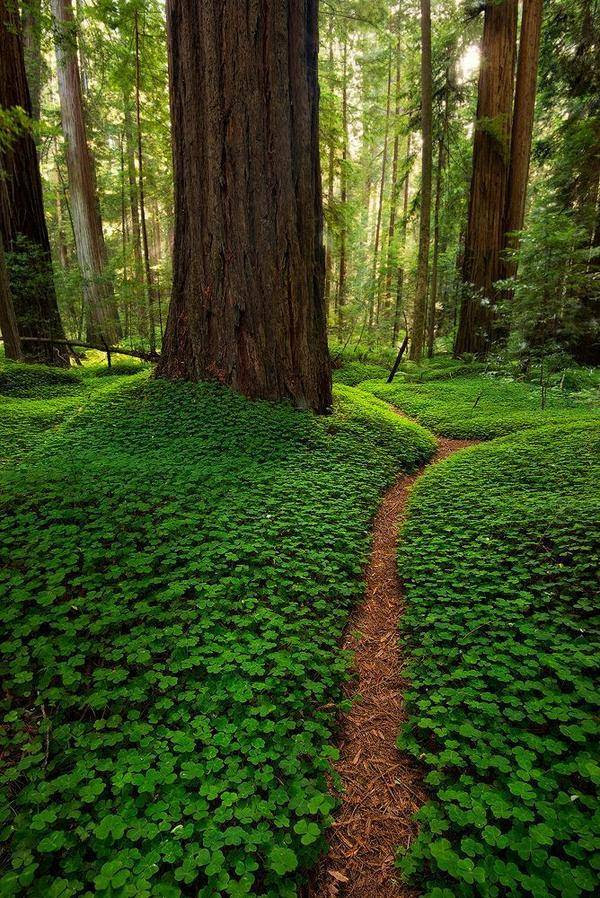
“Introducing Happiness in a Redwood Forest” by Joe R. McBride – February 2021

            In May 2015 I was asked to take a group of Spanish students to visit the redwood forest in Anderson Grove near Healdsburg, California.  The students were sophomores from the University of Navarra in Pamplona, Spain.  Most of them had not previously visited the United States and none had been in a redwood forest.  They were typical of the 18- and 19-year-old students  whom I had taught at Berkeley.

            When we arrived at the parking lots at Anderson Grove they piled out of the vans and clustered in small groups intently engaging in conversation.  Some who were not engaged in conversation were texting on their cell phones or taking picture.  I lined the students up in single file and walked them passed the entrance kiosk and into the forest.  We walked about 100 yards accompanied by a cacophony of their conversation.  Many of the students were also texting and taking pictures.  Stopping the group, I told them I wanted them to experience the forest on a basic level and that I thought their conversation, texting, and photography would interfere with that level of experience.  Then I asked them to turn their cell phones off and give them to me.  Some students seemed very reluctant to give up their cell phones.  They looked pained by my request.  Having obtained their cell phones, I asked them to walk alone through the forest to an opening about ¼ mile further along the trail.  I asked them to stay 50 feet apart and not engage in any conversation with other students. This was to insure that they would have a more or less individual experience of walking through the redwoods. 

            The students walked individually through the beautiful grove of ancient trees.  When we all assembled in the small clearing at the end of the walk, I gave each student a piece of paper and asked them to write a list of words to describe how they felt while walking through the redwoods.  After 5 minutes each student read the words he or she had written down.  These included the following words, some of which  appeared on several of the student’s lists: “peaceful”, “calm”, “reverent”, “sublime”, “relaxed”, “comfortable”, “happy”.       I too had experienced many of these feeling walking alone through redwood forests.  The silence and majesty of the trees always melted away the anxiety and trivia that cluttered my mind.  Any sense of my problems seemed insignificant in the presence of the age-old, giant trees.  Being among them made me feel at peace with myself, the world and happy.

            I returned the student’s cell phones and invited them to walk back to our vans in the parking lot.  The cacophony of conversations, texting, and photographing returned as we walked back.  But I was glad they had experienced a special level of happiness in the redwood forest.

________________________________________________________

JOE R. MCBRIDE – Prof. Emeritus , Landscape Architecture and Environmental Planning , U.C. Berkeley

SPECIALIZATIONS Vegetation and ecological analysis; urban forestry; historic landscape restoration.

BIOGRAPHY: Professor McBride’s current research involves projects on (1) the effects of urban forests in the reduction of air pollution in China, (2) the composition, structure, and function of urban forests in different biomes, (3) the role of fire in riparian woodlands of the Sierra Nevada, and (4) wind patterns, micro-climates, and windthrown hazard in urban areas.

AWARDS + RECOGNITION: Merit Award for Stanford University Vegetation Management Plan. ASLA. 1983 Resources Preservation Award for San Francisco Presidio Study. National Resources Council. 1987Distinguished Teaching Award. University of California. 1991Carl Alwin Schenck Award for Distinguished Teaching. Society of American Foresters. 1992Honor Award for Sutro Baths Historic Restoration Plan. ASLA. 1993Donald P. Gasser Award for Distinguished Contributions to Forestry Education. University of California. 1997 and 2007Fellow Society of American Foresters. 1997Seal of the College of Natural Resources. University of Tehran. 1999Research Award International Society of Arboriculture – 2003 Elected Member of the Chinese Academy of Forestry – 2004Keynote Speaker – Annual Meeting of the International Society for Arboriculture. Honolulu, Hawaii. July 2007Outstanding Field Course Teaching Award, College of Natural Resources, University of California, 2008Keynote Speaker – Ohio Conference on Urban and Community Forestry. Ohio State University. Columbus, Ohio. October 2009The Outstanding Educator Award. Council of Educators in Landscape Architecture, 2009The California Preservation Foundation Award for “Restoration of the Gardens on Alcatraz Island” – 2009Keynote Speaker – International Conference on Urban Forestry in Challenging Environment. Beijing Forestry University. Beijing, P.R.C., September, 2010Best in Practice Award, Northern California APA – San Francisco Better Streets Plan, 2010Charter Award, Congress for New Urbanism – San Francisco Better Streets Plan, 2011AWARDS + RECOGNITION

JOE’S PHILOSOPHY & MANY PUBLICATIONS CAN BE GOOGLED

________________________________________________________
BILLY’s COMMENTS: In July 1997, Prof McBride and Dean Harrison Fraker led a team of five members from UC Berkeley’s College of Environmental Design on a five day visit to Ningbo, China – Billy’s ancestral home. They consulted with the Ningbo City Government on how to develop a model urban design plan for simultaneous achievement in both economic development and environmental protection strategies . Prof Joe McBride and Dean Fraker led the Berkeley Team. A year later The 1990 Institute, UC Berkeley, and Ningbo City jointly submitted a proposal to ADB ( Asia Development Bank ) via China’s Central Planning Office. Although the master proposal, which focused on priorities in development sequences, was rejected due to ADB’s switch in policy in funding only actual construction projects instead of planning studies. Prof. McBride obtained a separate grant to do a Urban Forest Study for Ningbo. Poeple generally all respect Joe and appreciate his firm and thoughtful caringness. He is forever a DEAR FRIEND if not your BEST FRIEND.

__________________________________________________________

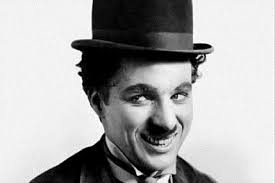
Friendship Quotes Including One From Charlie Chaplin – February 2021

From Charlie Chaplin:

ONE Good FRIEND is equal to ONE Good Medicine…!
Likewise, ONE Good Group is equal to ONE Full medical store…!

Six Best Doctors in the World….
1.Sunlight,
2.Rest,
3.Exercise
4.Diet,
5.Self Confidence &
6.Friends.
_______________________________________________________

 “A friend is someone who understands your past, believes in your future, and accepts you just the way you are.”
– Unknown
 
“Don’t expect your friends to be perfect. Just expect them to be your friends.
Unknown
 
“Friendship is the hardest thing in the world to explain. It’s not something you learn in school. But if you haven’t learned the meaning of friendship, you really haven’t learned anything.”
– Muhammad Ali
 
“If ever there is tomorrow when we’re not together… there is something you must always remember. You are braver than you believe, stronger than you seem, and smarter than you think. But the most important thing is, even if we’re apart… I’ll always be with you.”
– Winnie the Pooh
 
“Growing apart doesn’t change the fact that for a long time we grew side by side; our roots will always be tangled. I’m glad for that.”
– Ally Condie
 
“One’s friends are that part of the human race with which one can be human.”
– George Santayana
 
“Be slow to fall into friendship; but when thou art in, continue firm & constant.”’
– Socrates
 
“Let us be grateful to the people who make us happy; they are the charming gardeners who make our souls blossom.”
– Marcel Proust
 
“You can always tell a real friend: when you’ve made a fool of yourself he doesn’t feel you’ve done a permanent job.”
– Laurence J. Peter
 
“Friends are those rare people who ask how we are and then wait to hear the answer.”
– Ed Cunningham
 
“The most beautiful discovery true friends make is that they can grow separately without growing apart.”
– Elisabeth Foley
 
“Lots of people want to ride with you in the limo, but what you want is someone who will take the bus with you when the limo breaks down.”
— Oprah Winfrey
 
“When you stop expecting people to be perfect, you can like them for who they are.”
– Donald Miller
 
“A true friend is someone who thinks that you are a good egg even though he knows that you are slightly cracked.”
– Bernard Meltzer
 
“Sometimes being a friend means mastering the art of timing. There is a time for silence. A time to let go and allow people to hurl themselves into their own destiny. And a time to prepare to pick up the pieces when it’s all over.”
–Octavia Butler

“The best time to make friends is before you need them.”
– Ethel Barrymore
 
“Truly great friends are hard to find, difficult to leave, and impossible to forget.”
– Unknown
 
“Don’t walk in front of me; I may not follow. Don’t walk behind me; I may not lead. Just walk beside me and be my friend.”
– Albert Camus
 
“Each friend represents a world in us, a world possibly not born until they arrive, and it is only by this meeting that a new world is born.”
– Anais Nin
 
“A friend knows the song in my heart and sings it to me when my memory fails.”
– Donna Roberts
 
It is one of the blessings of old friends that you can afford to be stupid with them.
Ralph Waldo Emerson
 
Walking with a friend in the dark is better than walking alone in the light.
Helen Keller
 
I support you;
you support me.
I am in this world to offer you peace;
you are in this world to bring me joy.
Thic Nhat Hang
 
There is nothing on this earth more to be prized than true friendship.
Thomas Aquinas

A friend is someone who gives you total freedom to be yourself.
Jim Morrison

Friends are people who know you really well and like you anyway.
Greg Tamblyn
 
Friendship is, a long journey through the hills and valleys of life.
Unknown
 
Friends are the most important ingredient in the recipe called life.
Unknown
 
If you have good friends, no matter how much life is sucking , they can make you laugh.
P.C. Cast
 
The greatest good you can do for another is not just to share your riches but to reveal to him his own.
Benjamin Disraeli
 
The most I can do for my friend is simply be his friend.
Ralph Waldo Emerson
 
One of the most beautiful qualities of true friendship is to understand and to be understood.

Seneca
Close friends are truly life’s treasures. Sometimes they know us better than we know ourselves. With gentle honesty, they are there to guide and support us, to share our laughter and our tears. Their presence reminds us that we are never really alone.
Vincent van Gogh
 
We can live without religion and meditation, but we cannot survive without human affection.
Dalai Lama
 
Friendship involves many things but, above all the power of going outside oneself and appreciating what is noble and loving in another.
Thomas Huxley

The best things in life aren’t things… they’re your friends.
Unknown
 
Friendship with oneself is all important because without it one cannot be friends with anybody else in the world.
Eleanor Roosevelt
 
To have a friend and be a friend is what makes life worthwhile.
Unknown

_________________________________________________________

Friendship Destroyer aka Something Not to Do to Enhance Friendship aka Never rent to a Friend – by an anonymous friend

This summary was written in response to a request by my friend, Billy Lee who asked me to write the story. I was telling Billy about friendship or lost friendship.  i.e. it may be considered a case of how to lose a friend.  Exact names and locations are somewhat different but the story is exactly the same.

______________________________________________________

Never Rent To a Friend

Circa 1984 my wife and I were living, as empty nesters, in a desirable area in the San Francisco Bay area and owned a lovely home.   Sam was the realtor representing us in buying this lovely home and he did a good job.  He was a very nice man and we stayed friends for years after. 

 My wife and I were very happy.  I was a Senior Program Manager for a defense contractor and really enjoyed my position.  My wife found a position very similar to what she had at our previous location and she was quite happy.  We were both happy.

About 1989 U.S. defense contracts were drying up since the country was making more love than war in that time frame.  Yes, I was laid off.

Finding employment – at my level and age 51 – was a definite challenge.  Yes I know it’s illegal to discriminate on the basis of age but …..I’m just saying you know.   Long story short I accepted a position with a company outside of Dallas, TX.   I had consulted for this company during much of this period of about 9 months of unemployment.

When it came time to relocate we of course called our friend Sam regarding selling our house and considered ourselves fortunate to have a nice honest realtor to deal with etc.  Much to our surprise he asked would we be interested in renting our house……to him!  He gave us a very logical summary of the benefits to us including something that we had never really thought of i.e. we would have a home in CA if we wanted to come back, as we probably would, since we had half our family here i.e. our son and his family.   Sam clearly indicated the projected unbelievable appreciation of real estate in our area and how difficult it would be to get another home like ours in the future.  Sam also told us that he wanted to sell his house, take out the large equity value therein and invest it in an opportunity that had been offered him which he indicated was a really good deal.    Us renting our house to him would solve lots of problems with his plan and allow him to stay as a realtor in our area; he felt the timing was exceptional.  We thanked Sam and told him we would let him know.

We did think about it.  Financially it was a win-win for both parties.  Although we had never rented before a major factor to me in renting was having good tenants that will take care of and won’t damage your property.  Since we were certain Sam would take care of the property that major consideration was of no real concern with this deal.  We decided to do it.

Watch this great story go downhill!

Things went well for about 4 months.  Well is defined as payments on time and no unusual maintenance problems.  Month #5 payment was about 10 days late and month #6 payment was even later.  Month #7 there was no payment.  I reluctantly called Sam.  I was reluctant because it’s not a pleasant type of conversation to have and since Sam was a friend it made it more uncomfortable.  Sam indicated he was very sorry and embarrassed.  He indicated there was a problem with his investment not panning out as planned,  but things were in the process of being corrected that would allow him to recover and send us all back payments etc. I told him that I also was sorry to hear about the investment turmoil but I could not carry both mortgages.  He promised to call if any further problems develop.

Month 7 payment never came and midway through month 8th I called Sam to ask where are payments 7 & 8.  He explained not only the major investment turnaround was going slower than planned but his wife had become ill and needed to be taken care of further delaying progressive efforts.  Of course I told him I was sorry to hear about his wife however we need to get this rental situation corrected as I could not continue without timely payments.  He assured me it would be corrected soon however would not give me a definitive date as to when.  I closed by telling Sam I would pray for his wife but we need to resolve this matter quickly.

Month 9 not only had no payment but we were unable to contact Sam.  After leaving several messages on his phone, my last message advised Sam that I was sorry but I would be turning this matter over to a lawyer…..which we did I’m sorry to say.  We hired an attorney in the town where the house was and she sent a letter to Sam regarding the problem.  About a week later I was contacted by Sam’s son who lived in Southern CA.  Although he was irritated with me he promised immediate action to provide all back funds….and he did in a timely manner. 

Sam promptly vacated our property and our life as I’ve never seen him again. I believe he went Instead of renting the house further, we promptly sold it, using of course, and another realtor.   Although this created some stress and hard feelings I wish we hadn’t lost Sam as a friend…. but I suppose that’s life.???

End

_____________________________________________________

BILLY’S COMMENTS : Most friends like to help each other whenever possible, but sometime it is not financially possible. The problem in this story started with Sam’s unfortunate investment plus his wife’s illness. The lawyer’s threat to sue apparently forced Sam to get help from his son. The son was honorable and paid back nobly. I hope that the old friends will meet again and laugh over that crisis and cheer and congratulate Sam for having such a Wonderful Son. Sam’s son should be commended, indeed !

_______________________________________________________