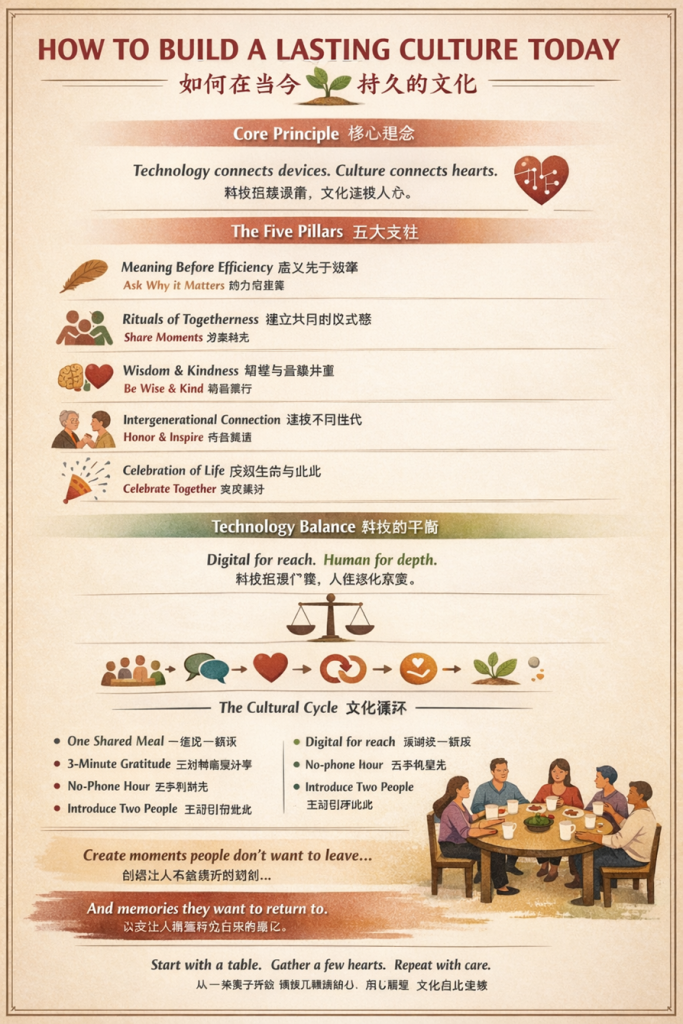
ChatGPT: This is a rich and important question—almost like mapping the “personality types” of civilizations across time. Let’s explore it in a way that’s both grounded and useful for your broader “Age of Culture” vision.
🌍 1. Major Cultural Types in History (with Examples)
🕊️ Peace-Oriented Cultures
- Example: Bhutan (modern), ancient Buddhist kingdoms
- Core values: harmony, balance, compassion
- Measurement of success: well-being (e.g., “Gross National Happiness”)
- Strength: social stability, mental well-being
- Risk: vulnerability to aggressive neighbors
👉 These cultures often prioritize inner happiness over expansion.
⚔️ Warrior / Expansionist Cultures
- Example: Sparta, Mongol Empire
- Core values: strength, honor, discipline, conquest
- Strength: rapid expansion, strong unity under threat
- Risk: burnout, collapse after over-expansion
👉 These cultures often don’t last long in their original form—they either:
- transform into administrative states, or
- fragment after peak expansion
🌱 Agrarian Civilizations
- Example: Ancient Egypt, Imperial China
- Core values: stability, continuity, land stewardship
- Strength: long-term endurance (centuries to millennia)
- Risk: resistance to change, vulnerability to disruption
👉 These are among the longest-lasting cultural systems in history.
🦌 Hunting / Nomadic Cultures
- Example: Indigenous peoples of the Great Plains, Central Asian nomads
- Core values: adaptability, survival, relationship with nature
- Strength: resilience, mobility
- Risk: displacement by settled civilizations
👉 These cultures endure as identities, even when political power is lost.
🧠 Idealistic / Philosophical Cultures
- Example: Athens, Axial Age
- Core values: truth, beauty, ethics, knowledge
- Strength: long-lasting intellectual influence
- Risk: political weakness or internal division
👉 Their ideas often outlive their political structures by thousands of years.
⚙️ Pragmatic / Administrative Cultures
- Example: Roman Empire, modern technocratic states
- Core values: law, order, infrastructure, efficiency
- Strength: scalability, governance, systems
- Risk: loss of meaning, over-bureaucratization
👉 These cultures often evolve rather than collapse outright.
😊 Happiness / Well-being Focused Cultures
- Example: Bali (community ritual life), Bhutan again
- Core values: joy, ritual, togetherness, spirituality
- Strength: strong social bonds, life satisfaction
- Risk: economic or military vulnerability
👉 These cultures are often quietly resilient, though less dominant globally.
🔄 2. Why Some Cultures Last (and Others Don’t)
A. Longevity Factors (Why Cultures Endure)
1. Balance Between Stability and Adaptation
- Imperial China lasted ~2,000 years because it:
- preserved core values (Confucianism)
- adapted institutions over time
👉 Lesson: Too rigid = break. Too flexible = lose identity.
2. Strong Cultural Narratives
- Shared stories, rituals, and meanings
- Example: Hinduism has endured for millennia
👉 Culture lasts when people feel it, not just follow it.
3. Social Cohesion (Trust + Belonging)
- Communities that eat together, celebrate together, mourn together
- These outlast purely economic systems
👉 This aligns strongly with your interest in togetherness and gratitude.
4. Ability to Absorb Others
- Roman Empire integrated diverse peoples
- Ottoman Empire allowed cultural pluralism
👉 Cultures that include rather than exclude tend to survive longer.
B. Causes of Cultural Decline or Transformation
1. Overemphasis on One Value
- Sparta → too militaristic
- Late Rome → too materialistic
👉 Imbalance leads to fragility.
2. Loss of Meaning
- When people stop believing in shared values
- Cynicism replaces purpose
👉 This is one of the biggest modern risks.
3. External Pressure
- Invasions, colonization, economic domination
- Hunting cultures especially affected
4. Success Leading to Complacency
- Prosperity reduces discipline and unity
- Internal decay replaces external threat
🌱 3. A Deeper Pattern (Across All Cultures)
Almost every long-lived civilization cycles through:
- Formation (Idealism)
- Expansion (Energy, sometimes war)
- Stability (Agrarian/pragmatic balance)
- Comfort (Wealth, refinement)
- Drift (Loss of meaning)
- Transformation or Collapse
👉 This pattern echoes thinkers like Arnold Toynbee and Will Durant.
🌼 4. What This Means for “The Age of Culture”
If you’re thinking about building a future-oriented cultural movement, history suggests:
The most sustainable culture combines:
- 🧠 Idealism (meaning)
- ⚙️ Pragmatism (function)
- 🌱 Stability (tradition)
- 😊 Joy (human connection)
👉 Not one type—but a harmonized culture.
✨ A Simple Insight to Carry Forward
Cultures don’t last because they are strong.
They last because they remain meaningful to the people living inside them.