“A CHALLENGING BUT INTERESTING REFLECTION ON THE MEANING OF FRIENDSHIP” by Michael G. Crisp – May 2021

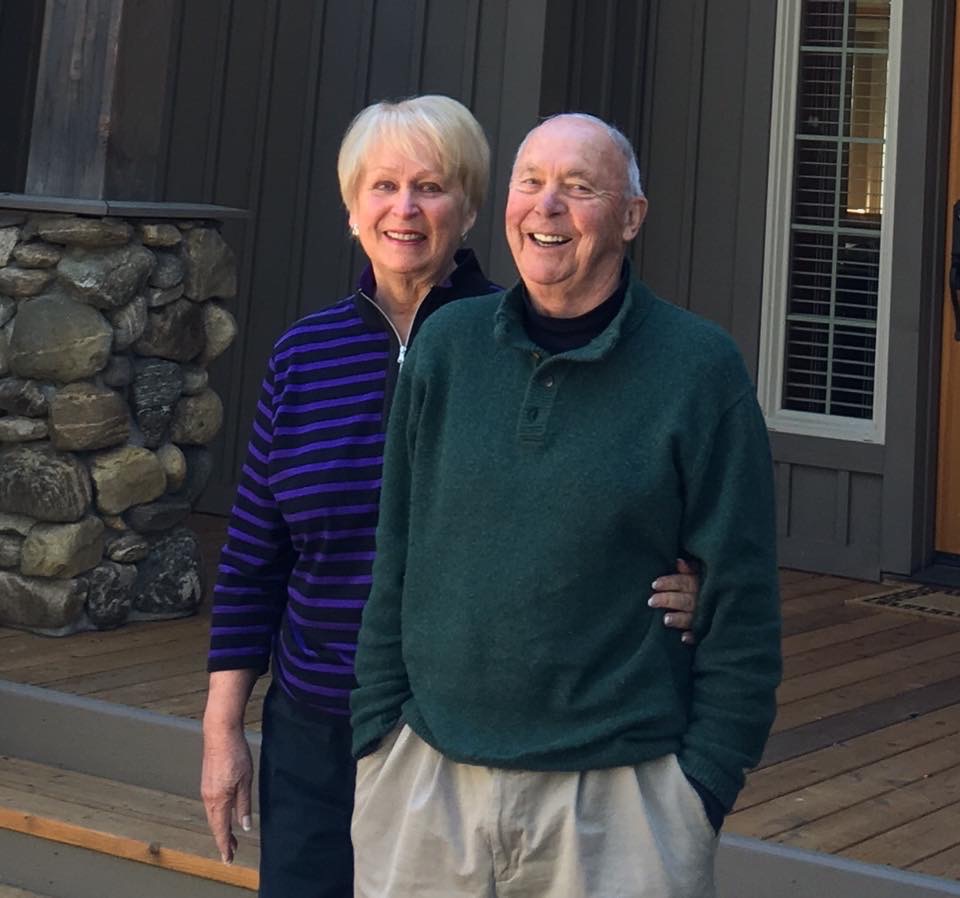
Mike Crisp and wife Leslie in Ladera, Portola Valley, Ca. Bio : Born in Kentucky. Raised in upstate NY. Colgate University graduate (Philosophy), Officer in U.S. Coast Guard, Editor-in-Chief, McGraw-Hill College Division, VP and Publisher, Science Research Associates (IBM), Chairman and CEO Crisp Learning. 

____________________________________________________

Friendship  

A few months ago I wrote an article for our local community newsletter featuring Billy Lee and his family. Part of the article focused on Billy’s website Friendshipology.net. In reading several of the blogs on his site, I became intrigued by the concept of friendship; what it was, how it occurred and why it was so important. Following are some of my thoughts on friends. 

What Are Friends? 

I think they are someone that you can rely on to be honest with you. Individuals that you trust. People you can laugh and or cry with. A person that can provide empathy and comfort. And someone you enjoy sharing experiences with. Friends are also those who can teach you about new things, including cross cultural customs and lifestyles.


Types of Friends  

Friends come from a variety of sources. There are childhood friends; school friends; work and or military service friends; family friends and friends of the family; couple friends; casual friends; neighborhood friends; old friends and new friends; and finally best friends. 

Making Friends  

The most important thing in making friends is that the process should be natural – not forced. Friends are individuals that you enjoy being with. Often friends will have a shared interest. A friend is someone you look forward to seeing regardless of how much time has passed since your last interaction. Making friends requires follow-up and communication. It also should mean that you care about your friends well being. 

Keeping Friends  

My wife is especially good about making and keeping friends. In thinking about how this works, I have noticed that in addition to showing an interest in the other person and being a good listener, she often follows up with a phone call, text message or letter to let her friends know they are in her thoughts. True friends are those who connect with you in good times or bad. True friends value your opinions.  

The Importance of Friends 

My Dad often said, “there is no honor in being the richest person in the cemetery”.  As we age and experience ups and downs, it becomes increasingly apparent how important friends are. Much more important than money or possessions. More important than social status. I believe the best marriages are based on friendship. In conclusion, friends are perhaps the most important element in this thing called life.   

___________________________________________________ 

BILLY’S COMMENTS : Mike and Leslie have been our old friends and neighbors in Ladera since early 1980s, We actually got acquainted on the Ladera Tennis Courts. I remember Mike had a very strong forehand strike and ran like a basketball forward for every ball conceivable. Leslie was definitely one of the steadiest players in our group. Everyone wanted to partner with her at our famous July 4th Ladera Doubles Tennis Socials.

_____________________________________________________

FRIENDSHIP SIDETRACKED – BY NOT KNOWING OR APPRECIATING OTHER’S DIFFICULT CONDITIONS-SITUATIONS.

“To promote Cross-cultural Friendship, increasing understanding about people and their difficult conditions can help. My writing – Reflective Thoughts – these days focus on upgrading Understanding. “

By : Bill W.Kwong – Global Educator and Program Consultant – April 2020

BA: Cornell MA: NYU & Stanford / 35+years teaching experience in N.Y.C. and S.F. / Previous Dir. of Global Initiative – Crystal Springs Uplands Sch. – Hillsborough, Ca. / Conducted educational immersive travel experiences since 1991 – mostly Asia – particularly China / Member – 1990 Institute Board of Directors – Promoting Trust and Understanding between U.S. and China

Reflective Thoughts and Stories: Entry #1

Many decisions from China often puzzle those who look at things through American lenses. I find it helpful to share the comparison elaborated below with my colleagues and students when I try to get them to understand why China does what it does. 

Geographically, U.S. and China have roughly the same landmass.  In terms of population, China has slightly more than 4 times that the U.S. has. In terms of land where you can grow food, U.S. has about 1.5 times that China has. The same landmass has been continuously cultivated for at least 2 to 3 thousand years in China when the land in the U.S. has only been heavily used after the Europeans arrived in the 16th century.

Sustaining a lot more people with a lot less land, particularly land that has been heavily used for a much longer time, requires a different kind of governing.

To bring this home to my friends who teach at independent schools, I ask them to consider the management of China and the U.S. similar to working with students situated in two different classrooms.  First, I invite my friends to think of teaching 72 teenagers in a classroom that is the same size as the one they currently have in an independent school. In this extremely crowded room, the students only have a fraction of the books, usable pens, and pencils. In addition, these overused instruments are generally worn, books come with torn pages, and pencils are broken. Teachers assigned to teach in this room are looking at a class that is far different than what we generally find in an elite independent school. In the more affluent school setting familiar to my friends, each of the 18 students belonging to a class comes to school every day with “new” books, functional equipment, and connection to a vast amount of resources. Two very different conditions indeed.

In the classroom I am accustomed to teaching in my independent school, I encourage free-flow sharing of ideas.  Students are allowed to speak their minds and inject their thoughts into the discussion without raising their hands.  When a student violates a rule, I have time to rationalize with the offender to show my care and to give him the extra dose of motivation to do better. Students feel validated, respected, and encouraged to embrace their individual aims and values.

In the other classroom, to get anything done so the arena can resemble a place of learning, I imagine that establishing and maintaining order would be the key.  Students have to wait for their turns to speak and speaking may be limited to a fixed time on the schedule.  Violations will be severely punished, often publicly so all can learn from the example.  Rule breakers will think twice before daring to disrupt the proceedings again. Individual requests serving the needs of a few do not have a chance to gain recognition when the needs of the mass are deemed supreme. It is very difficult to manage this classroom.  The purpose and the goal often focus on “survival”.  To get anything done, strict adherence to a rigid structure is crucial for its existence.   

This comparison often helps my fellow teachers and others to understand that the American style of government with its emphasis on freedom of speech, individual pursuit of happiness, and democracy are difficult to achieve and not necessarily suitable when it comes to governance in China today.

ABOUT FRIENDSHIP & MEDIATION BY ADRIAN HO – Varenna Consulting

When I heard a few years back that my Uncle Billy had started a “Friendshipology” initiative, I found it not at all surprising as I had long felt that he was an exemplar in the area of friendship.  He’s been a long life friend to my father and to me, and I’ve seen his remarkable ability to connect with people of all ages and all persuasions.
A little background…  My father emigrated from China to the US back in 1950.  He came to the US as a teenager and Billy was the first friend that he made after arriving.  I can only imagine the combination of security, comfort, and joy my father felt in making his first friend in a new land where he knew no one — and it came in the form of Billy.  Thus I have always known Billy as “Uncle” Billy, “Uncle” being a term of respect and closeness in Chinese culture.  
Years later, when I came to the Bay Area as a graduate student, the pattern repeated itself.  Having spent all my life in the Boston area, I knew few people in the Bay Area, and so at a welcoming reception for the new grad students and their families, I invited Uncle Billy to attend.  One memory I have from that event was that I introduced him to people there as “my father’s good friend,” and Uncle Billy corrected me by saying, “and I am Adrian’s friend too!”  This comment really struck me (and I remember it to this day, over 35 years later) as I had always related to Uncle Billy through my father, and here he was connecting to me directly by stating his friendship with me.  So Billy has been a first friend in a new place to both my father as well as to me!
___________________________
I had lunch with Uncle Billy the other day, and he talked about this blog and his thoughts on friendship.  I spoke to him about my involvement in community and court mediation and he asked me to write about mediation for his friendship blog.  So in what follows I will describe what mediation is and how it works, what are the key elements of good mediation, and finally how it relates to friendship.
A good way to introduce the topic of mediation is through the following quote:

“Conflict is inevitable but combat is optional”  –  Max Lucado

Conflict is indeed inevitable.  As individuals, people have their own needs and wants, and at any given time one person’s needs might be different than someone else’s — this is simply part of life.  Some examples of common conflicts include landlord/tenant disputes (security deposits, evictions, etc.), neighbor/neighbor disputes (noise issues, fence issues, etc.), disputes between businesses and customers, and family conflict (divorce, etc.).
A well-known way of dealing with conflict in our modern world is through litigation, which is combative in that the conflicting parties argue in front of a judge in an adversarial style, trying to prove their case and discredit the other party’s case.  Litigation tends to be expensive (lawyers fees, etc.), time consuming, and stressful, especially because of the adversarial nature of the system.  Ultimately, the judge makes a ruling, which may or may not be to one’s liking, so the outcome is uncertain.  
An alternative, non-combative way of resolving conflict is mediation.  In mediation, both parties come together in front of a neutral third party (the mediator) and get a chance to freely and confidentially speak their concerns and needs.  The mediator does not make a ruling, but rather is there to facilitate and encourage honest and free discussion between the parties.  In such an atmosphere, often the parties can come to some agreement themselves, which the mediator will help clarify and write up.  The key distinction is that any agreement is crafted by the parties themselves, so they are more likely to be satisfied with it than with a judge’s ruling, over which they have little control. 

The following table highlights some of the key differences between mediation and litigation

MEDIATION LITIGATION

TimeTypically a few hoursWeeks to Months
CostOften freeExpensive (lawyers fees)
Control of process and agreementParties are in control of the outcome and any agreementJudges rely on precedent and make a decision which results in loss of control and power for parties
CommunicationHonest communication of interests and needs is encouraged between partiesCommunication between parties is discouraged by counsel.  Opportunities to express concerns are limited
Emotional AtmosphereCooperative and informalAdversarial and stressful;  court is formal and can be intimidating
ConfidentialityAll information shared during mediation is privateAll information shared becomes part of the public record

Because of the many advantages of mediation, often courts will require that mediation be tried first before litigation.  It doesn’t take much time, and if an agreement is reached it tends to be something with which both parties are satisfied (since they are the ones that created the agreement).  If an agreement is not reached, the parties can still go on to litigation without too much time and effort lost. 
A good mediator will focus on several things in the mediation:  Remaining neutral and not judging, listening well, creating an environment in which both parties feel safe to honestly express their needs and concerns, and asking good questions to help the parties to talk with each other.  If these factors are present, it is often the case that the parties themselves will come to some form of agreement.  In the community mediation that I do, this happens in about 80% of cases.

So that’s mediation (in a nutshell);  but what about Uncle Billy’s Friendshipology Initiative?  What does mediation have to do with friendship?  Another quote is illuminating:

“Whenever you’re in conflict with someone, there is one factor that can make the difference between damaging your relationship and deeping it.  That factor is attitude”  –  William James

Just as conflict can arise between any two people, it can also arise between friends (or family members).  William James reminds us that the key factor in how the conflict will impact the friendship is attitude.  Indeed, if you have a conflict with a friend, and the way you try to resolve that conflict through the “litigation” model (by trying to prove you are right, trying to discredit your friend, trying to “win” the argument), then it is likely that your friendship will be harmed.  On the other hand if your attitude is aligned with mediation, then you will have an honest, open, respectful discussion with your friend to express both your needs and understand your friend’s needs, and you will try to find a way to come to an agreement, and your friendship can deepen.  In the first approach your goal is to “win” the conflict;  in the second approach your goal is to try to find an agreement.  The first approach focuses on yourself only, the second approach focuses on you and your friend and your relationship.   I think for most of us in any conflict we have with a friend or family member, if we take a step back and think about it, in almost all cases we will realize that the relationship we have with that friend or family member is far more important than winning the specific conflict.  Unfortunately in the moment we often tend to lose sight of that fact, and we slip into a “litigation” mode.  So next time you find yourself in a conflict with a friend or family member (or pretty much anyone for that matter) , a suggestion is to keep in mind the principles of good mediation:  Listen, seek to understand, be honest about your needs, and focus on how you can together reach an agreement as opposed to how you can “win” the conflict.  In doing so it may seem like a small victory, but if we all approach everyday conflict this way, we can help enable individual friendships to grow and deepen and help “friendship” in general to spread across our communities and the world.  ___________

Adrian Ho
Varenna Consulting
T:  415 377 4739E:  adrian@varennaconsulting.com

Friendship- its Origins, Evolution, & Future

By James Luce – Author of CHASING DAVIS – Feb. 2020

A dear friend and colleague at The 1990 Institute Executive Committee, James always thought that the word Friendshipology is not quite right. He suggests that I use G.I.F.T. The Global Institute for Friendship & Teaching – in lieu of Friendshipology

A SHORT FUN QUIZ TO GET THE COGNITIVE PROCESS GOING

Question One: Which word in the following set doesn’t belong ? Empathy, Love, Animosity, Loyalty

Answer: The second word in the set: Love

 The reason love is the odd word out in this set is because all the other words are of ancient evolutionary origin and are all emotions genetically and behaviorally expressed by many non-human species over millions of years…whereas love in the romantic sense didn’t appear until at the earliest a mere 800-years-ago in the songs of wandering Provençal troubadours…and, of course, love is exclusive to our species.

Question Two: What is the definition of Friendship ?

Answer:

     It depends on where you are in time. Today friendship is frequently defined as someone who is not a family member or lover for whom we feel affection/affinity/empathy/loyalty, with whom we share similar moral values, and on whom we rely for emotional support. You’ve heard that old saying “We chose our friends, but we’re given our families”. Yet 200,000-years-ago, when our fledgling species was struggling to genetically differentiate itself from other primates, friendship was exclusively limited to kin…members of our clan…on whom we relied for our very physical survival. 

          The definition of friendship also depends on where you are geographically. In some contemporary cultures, as in ancient times, kinship is the dominant, determining factor…such as the Xhosa in South Africa. In other cultures friendship may extend beyond kinship but is long in gestation and grand in its mutual obligations…such as in France. In the USA friendships are basically unrelated to kinship; many such relationships form instantaneously/transiently like bubbles blasting out of a champagne bottle…and are often soft, ambiguous connections that are much sought after in quantity but frequently short-shrifted in quality.

Question Three:

Are there any global, culturally universal common denominators determining friendship?

Answer:
          Perhaps…but none that have yet been verified by any properly controlled study or investigation that I’ve found. However, there’s a recent, reasonably rigorous Oxford University anthropological study (1) that has isolated seven candidates for universally accepted moral values. This study investigated sixty different cultures representative of our global diversity. Because shared moral values is one of the common characteristics of friendship, these seven provide insight into a common denominator for how friendship can work globally…and why it’s imperative now that it must work.

The seven universal moral values are: help your family; help your group; return favors; be brave; defer to superiors; divide resources fairly; respect others’ property.

          Given that all humans are genetically related and have been for over 200,000 years, it’s not merely coincidental that 29% of these shared characteristics are based on direct kinship; that 57% deal with cooperation within the group; and that 100% of them deal with preservation of the group…emphasizing the paramount importance of cooperation.

Perhaps surprisingly, these statistics are in stark contrast with the world’s major religions.

          The three Abrahamic faiths (Judaism, Christianity, and Islam) all accept the same basic Ten Commandments.(2) Yet only one of the seven globally accepted moral characteristics (14%) is included in the Ten Commandments (#8: the admonition to not steal) and only 40% of the Commandments deals with group preservation. 

Buddhism doesn’t have a “Ten Commandments” but it does have five traditional “rules” which are startlingly similar to the Ten: do not kill, do not steal, do not commit adultery, do not lie and don’t use intoxicants. Excluding the first four of the Ten (which deal with worshiping a specific deity and thus have no place in Buddhism), there’s an 80% overlap between the Abrahamic and Buddhist rules but, again, only a 14% overlap with the Universal Seven.

Hinduism’s Ten Commandments equivalent is difficult to identify, but traditionally the following seven are accepted as the “rules of behavior”: austerity, tranquillity, non-violence, non-adultery, non-corrupt, no stealing or coveting, no lying. These are similar to the Abrahamic and Buddhist set, but again there’s only a 14% overlap with the Universal Seven.

Thus, there’s no correlation between what people universally believe are the core characteristics of morality on the one hand and the rules advocated by their respective religions on the other.  This perhaps helps to explain in part why interfaith and international friendships can be formed. More on this topic after the quiz. 

Question Four: Which came first: Friendship or Controlled Use of Fire ?

Answer: Friendship came first…by at least 183 million years.

While there’s substantial evidence that our ancient ancestors (Australopithecus…Greek for “southern ape”) learned how to use fire about 1.7 million years ago, the origin of what became known as friendship (kin cooperation between social mammals) dates back as far as 185 million years ago to the first “pre-mammal” social species such as the tiny cat-like Kayentatherium.   Thus, even in its most primitive form, friendship helped our very distant ancestors survive and thrive during the Age of Dinosaurs.

Humans didn’t invent friendship, Evolution did.

Some species don’t make friends – even though they practice kin cooperation

          All species that live together in large groups cooperate with their kin, but not all such species make friends within their kinship group. For example, all social mammals make friends within their kinship group, but fish, ants, and bees do not. Why is that?

          The search for an answer to this question dates back thousands of years. How was it, for example, that bees “know” how to collectively build and protect a hive, serve their queen, find pollen and return home, make honey, nurture the young…in short, cooperate for survival of the species? Certainly bees didn’t attend school for sixteen or more years as would a human require to learn similarly difficult skills.

After centuries of false starts and wild conjectures, in the late 19th-century the concept of “instinct” was thought to explain all these complex behaviors. An instinct is genetically programmed by evolution. The behaviors exhibited are complex, rigid, invariable, specific to each species, and, of course, unlearned. Humans, being special, didn’t have any instincts. Back then it was believed that our behaviors were too cerebral, too sophisticated, too learned, and too divinely inspired to be merely instinctual. Instead, as with all other animals, humans had various, amorphous “drives” (hunger, thirst, procreation, survival etc.)…but no instincts. Unlike bees, we had no rigid set of genetic instructions as to how to fulfil these drives…how to hunt, how to find water, how to find a mate, how to build a dwelling, how to invent the bow and arrow, or even how to change a diaper.

But science marches on.

By the late 20th-century we’d learned that all human behaviors (as well as the behaviors of all other species) were genetically determined but modified by both experience and the environment.(3) The difference between humans, other mammals, and insects is a matter of the relative degree of rigidity of the genetic impulses and the variable extent to which environment/experience impact behaviors.

Genetically controlled behaviors of bees are modified only by genetic mutations and are altered only by extremes in the environment such as fire, earthquake, drought, injury, and disease. In contrast, human behaviors are both modified and altered by relatively minor environmental/experiential variables (e.g. minor variations in upbringing, cultural expectations, and even temperature). Bees are like steel, whereas humans are like ice cubes. Steel remains solid so long as it isn’t placed in a blast furnace at 2,500º F. Ice cubes remain solid unless taken from the freezer and left on the kitchen counter, a difference of as little as 0.1º F. 

As with all animals that live in large groups, bees must cooperate or go extinct. Bees don’t have to make friends in order to cooperate…so they don’t. There’s no genetic blueprint in bees coded for friendship or anything like it. Bees cooperate with each other because they have no choice or even an ability to make choices. Evolution is very stingy and doesn’t approve of wasted genes or wasted expenditure of metabolic energy.

Humans live in large groups, so we also must cooperate or go extinct. Our problem at the moment is that long ago we evolved a highly sophisticated choice-making mechanism called our cerebral cortex. Evolution expended an immense genetic fortune on this “choice box” because it was an extremely useful tool for survival…or at least it was for the first 200,000 years.  Our species differentiated itself (filled its own unique environmental niche) in part by allowing each member of the species to make choices about almost everything…an extravagant capability unheard of even among our closely related primate relatives.

In terms of sheer numbers, our species is the most successful large mammal that has ever evolved.(4) In terms of the longevity of our species the answer is still out. Somewhere along the relatively short evolutionary road from our beginnings to where we are today we goofed, left something behind, took a wrong turn.

According to the Doomsday Clock (5), we “civilized” humans are closer to ending all life on this planet than at any time since the atomic bombs were dropped on Hiroshima and Nagasaki. Back then the Clock was set at seven minutes before midnight. On January 23, 2020 the Clock was reset to 100 seconds before midnight, the shortest time ever recorded.(6) You’re supposed to brush your teeth every morning for a longer time than that. 

So what went gone wrong with our unique cerebral choice box?

Our species has faced extinction at least once before, when the Doomsday Clock (had it existed) would have been at five seconds before midnight as far as human life on Earth was concerned. Geneticists have determined that all humans today are the descendants of between 1,000 and 10,000 Homo sapiens, a tiny remnant of people who somehow survived some sort of catastrophe about 70,000-years-ago.(7) It’s uncertain what the cause was of this first near-extinction of our species, but it certainly wasn’t due to human activity.

Not true today.

Scientists moved the Clock setting this year due to a variety of changes over the last year, all of which are the caused in whole or in large part by human activity: climate change is speeding up, nuclear arms treaties are collapsing, population and forced immigration continues to rise, and global tensions between the major nuclear powers are heating up faster than our atmosphere and oceans.

 Seventy-thousand-years-ago our species managed to survive because whatever the cause was it was transitory, insufficient to finish us off. We didn’t need any new skills to survive.

Again, not true today.

Unlike in the remote past, today we’re all in one big kinship group whether we like it or not, whether we know it or not. In the remote past all tribes were remotely scattered and self-sufficient. When tribes did meet and conflict (not cooperate) there was no loss of self-sufficiency. Each tribe could hunt and grow its own food, build its own housing, find its own water, make its own clothing, tools, weapons, and maintain its only source of energy…fire…for heat, light, and protection. All of these functions were the result of close kin cooperation.  This cooperation was both ingrained (genetically based) and learned from our kin as children from the time we were babies. Cooperation came as naturally to our ancestors as was the tribe’s spoken language. The skills necessary for survival were known by everyone in the tribe. Some did better at some tasks than others, but everyone could pitch in at almost any task when needed. Tribe A did not need Tribe B to survive.

Once again, not true today.

In today’s world few of us know how to hunt or grow food, build our own housing, find our own water, make our own clothing, tools, weapons, or provide our own source of heat and light, or how to protect ourselves against bandits and bears. Even huge “kin” groups such as cities are collectively capable of performing only a few of these functions, but not all of them. Instead, we rely on something that is evolutionarily totally unnatural, totally without genetic basis…it’s a new form of cooperation held together, not be genes and lessons from our mother’s knee, but rather the glue is made up of complex and often indecipherable business contracts, labor/management agreements, legislation, treaties, international trade agreements, vast systems of international transportation, highly costly and incomprehensible-to-most-people scientific and engineering research and development done in a language few of us can understand, let alone duplicate. Tribal conflicts of brief duration with not-usually-lethal consequences have been replaced by ceaseless wars with weapons of devastating destruction. We no longer have shared rules of either peace or conflict.

Tribe A can no longer survive without Tribe B.

In summary, over the 10,000 of “civilizing” ourselves we’ve lost or severely repressed the ancient genetic compulsion to cooperate even with our immediate kinship group, let alone with an immense, scattered one. Things have deteriorated so badly that we now are forced to teach parents how to socialize their children and even teach teachers how to socialize their students. What a mess.

We must now turn to the other side of the cooperation coin…conflict, hatred and distrust of “different” tribes. Way back when, survival depended not only on intra-tribal cooperation, but also on communal distrust and fear of other tribes. Why? Because other tribes competed for the same resources. Genes in tribes that did not code for conflict-with-the-Others soon disappeared because anyone not so coded wasn’t likely to live long enough to reproduce. Infants were taught not only to cooperate with friends and family, but also to hate and kill those not of the tribe.

Over the millennia tribes grew into nations, each with their own language, religion, customs, and taboos. Conflict with the Other became ingrained not only in our genes but also in our cultures. As noted lyrically in that insightful song from South Pacific “You have to be taught to hate and fear, you’ve got to be taught from year to year…you’ve got to be taught to be afraid of people whose eyes are oddly made and people whose skin is a different shade…”

If our species is to survive into the next century we must immediately start teaching our children that we are all part of one vast Tribe of Humanity with its seven billion members and also teach them that intra-cooperation within that Tribe is as essential to us now as it was way back then for intra-cooperation between tiny little kinship groups of a few dozen people.

The difficulty is that we have never experienced millions of years of evolutionary coding for cooperation within something as big and diverse as the Tribe of Humanity. We must rely entirely on educating our young. It’s too late to teach the vast majority of adults whose mind and behaviour sets are too rigidly in place to be so fundamentally altered as to actually “cooperate with both thy close and distant neighbour” no matter what the race, creed, or cultural quirks that particular and extremely different neighbor may display.

How that crash course in global cooperation and friendship is to be implemented I leave to people who are wiser, younger, and more administratively competent than am I. A good start would be a fully funded and staffed organization operating under the name of Global Institute for Friendship and Teaching.

OBT, James

Footnotes:

  1. Seven Moral Rules Found All Around the World: links to two articles on the subject and the full study

http://www.ox.ac.uk/news/2019-02-11-seven-moral-rules-found-all around the world

https://www.mnn.com/lifestyle/responsible-living/blogs/universal-moral-rules

https://www.journals.uchicago.edu/doi/full/10.1086/701478

2. Islam views the Old and New Testaments to be earlier and genuine revelations from Allah.https://www.pbs.org/empires/islam/faithpeople.html

3. Details of this interaction are the topic of what’s known as The Nature v. Nurture Debate…that is, to what extent are behaviors controlled by our genes or by our environment/experiences. 

https://www.simplypsychology.org/naturevsnurture.html

4. Nobody’s counted them, but it’s estimated that both rodents and bats outnumber humans. Excluding them, we’re number one in terms of population size. https://www.worldatlas.com/articles/most-populous-mammals-on-earth.html

 5. The Doomsday Clock…its history https://www.miamiherald.com/news/nation-world/national/article239576533.html

6. The Doomsday Clock…its current setting   https://thebulletin.org/doomsday-clock/current-time/

7. Whatever the cause, we’re descended from only a relatively few people: https://www.livescience.com/29130-toba-supervolcano-effects.html

Links to additional reading:

  1. The origins and meaning of instinct, NCBI: https://www.ncbi.nlm.nih.gov/pmc/articles/PMC5182125/
  2. The history of friendship and why it’s important: https://www.huffingtonpost.co.uk/2014/02/10/history-of-friendship-evolution_n_4743572.html?guccounter=1&guce_referrer=aHR0cHM6Ly93d3cuZ29vZ2xlLmNvbS8&guce_referrer_sig=AQAAABNIy-p-E7HjFOOzE7zf60KJ39V5dfJu1DrErEvRSY11fZ-H2pgqbfdA87a8vL_HFYFOfp-LavM7yRAeMzp5Cp9EguzXjQ8sGuktpsNr9pGE0MLYrTAOJIRkq9Swb7WlSAqo6j3EK5xAfziI_ZfJxbncryyWPWGftEJyekRy05y8
  3. The evolution of friendship: https://www.americanscientist.org/article/the-evolution-of-friendship 
  4. Variability of moral values globally: https://www.pewresearch.org/fact-tank/2014/04/15/whats-morally-acceptable-it-depends-on-where-in-the-world-you-live/
  5. The differences between Chinese and American business ethics: http://home.ubalt.edu/ntsbpitt/ethics.pdf      
IN PROMOTING FRIENDSHIPOLOGY MEET VIC YOUNG, my FF FRATERNITY BROTHER

Vic Young is my FF (Chinese Fraternity) Brother. Our Friendship deepens as we share ideas and insights. His letter below – titled ” Won’t you Be My Neighbor?” indeed inspires and challenges me at the same time. What I learn most distinctly from his letter is that “To Become Good Neighbors or Friends it usually starts with an easy “Hello”, followed by building Honest, Caring, Civil and Empathetic Mutual Respect, and Understanding. It”s more complex for us Chinese Americans in the United States today. “

Won’t You Be My Neighbor? by Vic Young

Bro. Billy,

You have been consistent over your life about living and leading with “friendship” and your current endeavors on your FRIENDSHIPOLOGY INITIATIVE.  I am humbled and daunted by your request to comment on the subject.

It reminds me of the sermon I heard years ago.  My pastor at our church was returning to the Bay Area from a trip.  He settled into his seat on the plane next to a gentleman.  After the seat belt sign was turned off, the gentleman struck up a conversation to break the ice with the pastor.

“What do you do for a living?”

“I am a pastor at the First Presbyterian Church in Berkeley.”

Not the response he was expecting, the gentleman nervously said, “Great.  I get it.  Do the right thing, turn the other cheek, do unto others…..”

Trying to keep the conversation going, the pastor asked the gentleman, “and what line of work are you in?”

The gentleman responded, “I am an astrophysicist.”

The pastor said with a smile, “oh, let me see.  Twinkle, twinkle, little star.”

Such is “friendship.”  There is more to it than meets the eye.  There is always context.  It is not always sugar and spice.

“Friendship” is often taken for granted. It is something that is often difficult to articulate or more importantly to demonstrate.

As fraternity brothers, our relationship is founded and perpetuated by friendship and fellowship.  Fraternal bonding is another conversation.

Your FRIENDSHIPOLOGY work addresses a broader audience. Friendship is like spinach; it is good for you, but…

I choose not to delve into this academically (philosophy, history, social and psychological impacts); nor with quotes and slogans. Well, maybe one slogan?

Won’t You Be My Neighbor?

That is the highly successful award-winning 2018 documentary film about Fred Rogers and his iconic children’s television show on PBS that guided generations.

Now, we are awaiting the release of “A Beautiful Day in the Neighborhood” starring Tom Hanks portraying America’s most beloved neighbor. It is about overcoming skepticism, learning about empathy, kindness, and decency.

Variety Magazine noted:  “behind the smile lay a weird sort of tough-nut faith that made him willing to look at dark things, and a philosophy of life that can only be described as…love. As in: love your children, love thy neighbor, love yourself. Fred Rogers may have come off, on TV, like a walking piece of kitsch, but the real truth is that this ordained Presbyterian minister was the world’s squarest Middle American flower child.” I did not know he was a minister.

The question is what is Mr. Rogers about, on-screen and in real life?  He really wants to be your “neighbor, to be your friend.”

Why is there interest in and anticipation of Mr. Rogers’ story through these two films?  It is not nostalgia. Simply, people need something to lift them up and to find new meaning in this world going through seasons of division, darkness, chaos, anxiety. 

Most of us do not know our neighbors.  We do not always act like neighbors.  We are constantly in transition. We are too busy with our own priorities and our own business to be neighborly and to be “friends.”

We need Mr. Rogers to move into our neighborhood.  He exudes friendship and love – love your children and love your neighbors.

We need to be like Mr. Rogers.  We need to be good Samaritans.

Friendship is the Golden Rule. Friendship is spiritual.

Today, it can be a challenge.  Friendship has also evolved in this modern society. In the past, friendships drastically differed; motivated by protection.   In the past, people chose to make friends for survival and protection from other people who bullied you. In the present society, people choose their friends for who they are of many qualities that make them connect to each other. Friendship has become more diverse ethnically and culturally. As time passes, the society we live in has changed the friend into someone of the ideal friend for themselves for comfort.

Friendship is a distinctive kind of concern for your friend, a concern which might reasonably be understood as a kind of love, Agape.  This is a kind of love that has come through the Christian tradition, by extension, our love for God and our love for humankind in general. It is the latter I think you are focusing on.

This does not mean it is easy.  Belonging to one another despite diversity and differences still plagues society.

 “Friendship” in today’s world needs to extend beyond your typical examples and outreaches in order to address the ills of the world. Friendship may mean that, for a moment, it is not focusing on your needs, but those of others.  This means turning the status quo on its head.

We, the world, need “friendship” more than ever.  We need not go into what is happening in the U.S. today, a deeply divided nation.

There are realities, but we are driven by mostly fear, presumption, intellect, biases, and definitions.

We cannot solve every problem out there, but we can make a small difference.

We have a severe homeless problem in our state.  Who knows when the problem will be solved?  Heretofore, like many people, I focused more on the discomfort of their presence and motives rather than their plight.

It is easy for us to walk past a homeless person, quickly.  It is as if they don’t exist, because we choose not to see them.  Yes, some are just pan-handling and others have serious mental problems.  Instead of rushing past them, is there one of them that would feel better if we just looked at them and acknowledged their existence, let alone part with $1 or a Big Mac?

Charity and kindness, not judgment and analysis.

What do you do when “spies and illegal aliens” move into the neighborhood?

Driven by the current leadership in Washington, Hispanics, Middle Easterners, and now the Chinese have been unnecessarily painted black, so they fade from sight. Racial profiling of Chinese in America is trending again.

Our government acts as if they suspect all Chinese, including Chinese Americans, and are willing to suspend civil and legal rights. Most importantly, they are fostering racism throughout the country in pursuit of security.  This is not just about the FBI, but Americans.  We have not learned from mistakes of the past and what happened to the Japanese and others around the world?  We need to speak up and make all Americans understand what should be done and what should not be done.

For us, the Chinese, we cannot hide from both sides of the issue and simply protest the obvious.  There are bad Chinese in America among us and trying to steal technology and thus endangering national security. 

Friendship means not conforming to patterns of the world. Don’t get to a default mode or safe posture. This is the USA. Where is the idea of freedom, if not friendship?  Friendship and civility do not trump (no pun intended) vigilance and security.

Friendship also means that we may be bolder and more tender.  That’s what enables solutions, reconciliation, forgiveness, family and safe communities.  Friendship is a beautiful neighborhood.