GEORGE DEPAI KAN TREASURES THESE AMAZING PARTING WORDS from his HIGH SCLOOL BUDDIES when he was leaving Kunming for HongKong in 1953

George DePai Kan

德培弟: 我们的友情是建筑在日复一日堆积起来的互相了解上,自从得到了你走的消息我的一切都不能正常了,在这种茫然的情感下叫我说什么呢?好,还是按照你说的写些有用的。 (一)不要認為一定要十全十美的人才能做朋友。當然每個人都有他的好處和壞處。你學他的好處感化他的壞處,不就行了嗎?(二)人不應該做不正當的事,即便他是我最好你朋友,如果他做了錯事,我也不放鬆他。(三)不應該總說人家的缺點,而應當將你所知道你告訴他。(四)不要太自信、太驕傲,比如下棋吧,如果對手是個新認識你的人,不妨輸給他兩局阿甘以上都是你跟我說過的話,我覺得這很寶貴,人的一生中又能聽見幾回這些忠實坦白的勸告呢?還有很多有價值的言語,我一時也想不起來。就這幾句話讓我們共同勉勵吧

Brother Depai: Our friendship is built on the mutual understanding that has been piling up day after day. Since I got the news that you are leaving, everything about me feels not normal. What can I say under this dazed emotion?  Okay, you ask that I write something useful ! (1) Don’t think that we must be perfect people to be friends. Of course, everyone has his strengths and weaknesses. We can learn from the others’ strength and help mend the other’s weaknesses. Should we not do that ?  (2) People should not do improper things. Even if our best friend does something wrong, we can not just relax him. (3) We should not always talk about other people’s shortcomings, but should tell them what we know. (4) Don’t be too confident or too proud. For example, in playing chess. If your opponent is someone new to you, be willing to lose a few games to him. 
The above, Depai, are all the things you have told me. I think they are truly precious. How many times can people hear such honest and frank advice in their lives? There are many more valuable words I do not remember. “Write something useful” you say. Okay, let us encourage each other at least with these few words.

__________________________________________________


德培弟:
你去香港的消息使我憂鬱到現在。同學至今,我們有說不出來的感情。你還記得我們一起說笑的情景嗎?你還記得我們在一起打球,在一起讀書的快樂嗎?你可發現了我們是快樂的人嗎?

現在你要去了,你的離去好像我們失去了火一樣,想起了人類沒有火的痛苦,是不知如何來形容的。你去了,將使我不如從前一樣的愉快;從此,我也少了一個共同研究學問的同志了。我現在有一個希望,就是能到香港去再和你共同學習。同享受那無限度的快活生涯。啊!阿甘!你等著我,我會到香港去找你的。

現在,來講幾句我們能互相勉勵的話:你是一個天真活潑的孩子,在你腦中充滿了正義,你是智慧絕頂的。你好活動,這使你交結了許多好友。人們似乎都願親近你。這都是你的好處,也就是你的成功的因素。望能保留下去。

你也有缺點。你常說人不應該太高傲,太自信。這是?痴可指的。但你卻常過於太不自信了。當然太自信是不好的,但如太不自信了,也是同樣的不好。一個偉人的成功可說是出於他的自信心的調和。他能處事於自信而心虛的態度,這就是他所以能出人一頭的原因。憑你的聰明,能克服所有的難。切不要失掉你的自信心。

希望你永遠快樂並且健康

Brother Depai: The news that you are going to Hong Kong makes me sad.  Classmates for so many years, we have unspeakable feelings. Do you remember us talking and laughing together? Do you remember the joy of playing ball and reading together? Did you find that we were the happiest people? Now you are going. You are leaving us lost without fire. Know the pain of human beings without fire. I don’t know how to describe it. Your going will make me less happy than before. I have now lost a comrade with whom I pursued knowledge together. I now only hope that I can go to Hong Kong and learn with you again. Together enjoy the infinite joyous life. Ah! A-Kan! Wait for me, and I will go to Hong Kong to find you.

Now, here are a few words that we can encourage each other: You are an innocent and lively youth, full of justice in your mind, and you are extremely smart. You are friendly and sociable. People seem to want to be close to you. This is your benefit and your success factor. Hope you keep it. You also have shortcomings. You often say that people should not be too arrogant or too confident. This is idiotic. Often you seemed to be lacking self-confidence. Of course it is not good to be overly confident, but it is also not good to appear lacking in confidence. A great man’s success is due to his ability to balance self- confidence with humility. Thus he will stand out. With your smartness, you can overcome all difficulties. Don’t lose your self confidence. 

__________________________________________________

德培友,你的走訊來得太突然了我沒料到我們同學數年卻會半途暫別。數年來,我們一起學習一起遊玩,剛0到了互相了解的時候,命運又把我們應硬生生地拉開.你可還記我們曾一起嘻笑,一起打球,一起習作的快樂嗎?這將是一個最美的回憶。願你別把它忘了。

你的走,使我的心受了一個不小的打擊。我意識到今後我所有的中學時代中將少了一位共同研究的好友。我心目中感到無限的空虛茫然。在這本小冊子上我又能寫些什麼給你呢?
你的走使我羨慕,因為你能先我走出這狹小的山國去接觸更寬廣的人生。我羨慕你能看到那變幻無端的海洋。可是要注意:越是文明的地方罪惡也越多。望你步步小心,著著防備。當心墮入了深淵,將反悔不及你是我所遇到的人們中最聰明的一個,希望你正常的利用你的智慧充實自己的身心,切不要聰明反被聰明誤。你有一顆善良的心及和靄的態度。任何人你都能相處的很好,這是你值得令人佩服的地方。你也有缺點:你缺乏自信心。當然人太自信了是不好的.可是不太自信是更不好。[有志者事竟成]這是一句千古名言,對自己失去信心的人將來會是一無所成。這是很危險的,望你能改過。還有你對於小事不太注意,比如說人家托你做一點事情,而你常常會把它忘掉。這雖是小事可是會影響你的信用,望你注意。

DePai, My Friend,  Your news came too suddenly. I didn’t expect our normalcy be disrupted like this.  For several years, we have learnt and played together, and then we got to know each other. Now fate pulls us apart so abruptly. Do you remember the joy of laughing together, playing ball, and studying together? This will be our most beautiful memory. I hope you don’t forget it.

Your leaving causes a big blow to my heart. I realize that I will lose a friend with whom I have studied together thtough out my middle school years,  . I feel infinite emptiness in my mind, now. What can I write for you in this booklet?

Your parting makes me envious, because you will be first to leave this small mountain country to come into contact with a broader life. I envy you that you can see the unprovoked ocean. But be careful: the more civilized the place, the more evil it maybe. I hope you will be careful every step and be on guard. When you fall into the abyss, I will regret that you are the smartest of the people I have met. I hope you can use your wisdom to enrich your body and mind. Don’t be smart and mistaken. You have a kind heart and a gentle attitude. You can get along well with anyone, and this is your admirable trait. You also have shortcomings: you lack self-confidence. Of course, it is not good for people to be too confident. But it is even worse if they are not self-confident.  There is a well-known saying that “ people who lose confidence in themselves will not be able to accomplish anything in the future.” That’s dangerous, I hope you can correct that. Also, you don’t pay enough attention to small things. For example, someone asked you to do something, and you often forgot to do it. Although this is a trivial matter, it will affect your credibility. I hope you will pay attention.

___________________________________________________

GEORGE KAN’s Brief Bio :

I was born in China.  We as a family lived in Hong Kong when the Second World War started. We went into China in 1942, staying in Guilin and Kunming until 1949.  We came back to Hong Kong in 1949, and went to the United States in 1951.  I went to Brooklyn Polytechnic Institute for my undergraduate and M.I.T. for my graduated school.  I became a Christian while I was in M.I.T.

My objective in life is to serve Jesus Christ in whatever ways God leads me. Lately it is the distribution of good music with a message through the Internet. God has also provided me with the means to fund His work through a charitable trust.

Seventeen years ago, when I was 70 years old, I thought that my life was going to end.  I came to this conclusion because in Psalm 90, a psalm written by Moses.  He said that a man’s life is about seventy, but if he is strong, eighty.  I thought that since I was not strong, that was my life. Thank God He has given me seventeen more years to live.

I was married to Sylvia Fong in 1961. We have four children, Elizabeth, Sarah, Paul, and Samuel. Thank God they are all Christians.

_____________________________________________________

BILLY’S COMMENTS :

George and I have been friends for nearly 60 years. I remember him trying to introduce me to Christ in the early 1960s by taking me to listen to the famous Billy Graham at the NYC’s Madison Square Garden. Despite of George’s continuing efforts, I have remained an Agnostic with a touch of Buddhist attitude. Only recently, we discovered that we have a very different take on Donald Trump, but we, indeed, still have deep respect and affection for each other. I asked Geoege for permission to post these precious PARTING WORDS from his old high school mates on this special Friendship website. He said “YES” without hesitation. BTW, this tradition of asking friends to write a few meaningful Parting Words is so good for validating, enhancing, and forever sustaining GOOD FEEELINGS among Friends. We should encourage that as a global tradition, indeed ! Thanks, George !

__________________________________________________________

PLEASE CONTRIBUTE AN ARTICLE TO MY FRIENDSHIPOLOGY WEBSITE – Billy Lee – WilliamMSLee@gmail.com – Sept. 2020

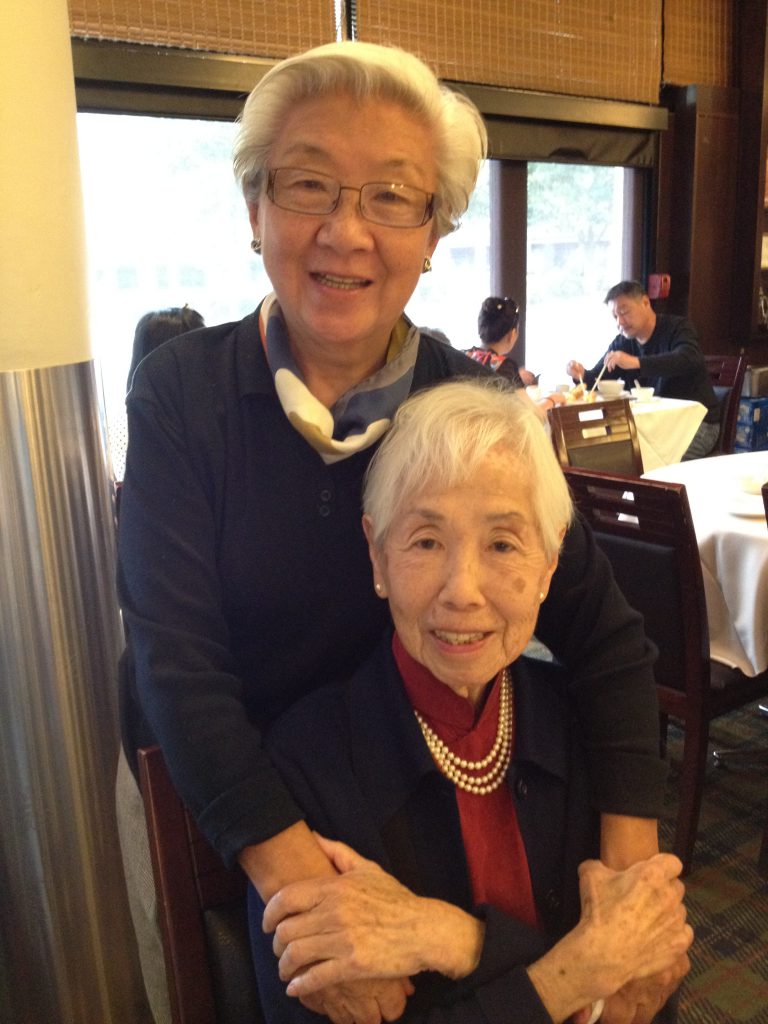
Billy and a picture of Kwan Ying

I joined the USCPFA-S.Bay Chapter in 2006, and was elected Membership Director in 2012.  That started my serious inquiry on what Friendship really means, and how it can be initiated, nurtured, sustained, and maybe recovered after some gross misunderstanding.  I started to do some research by reading books and by Googling.

I also wrote a few articles which were published in Women of China magazine, as well as Voice of Friendship, a publication by China Friendship Foundation for Peace and Development. I was particularly interested in promoting Home Stays in Building Cross-cultural Bonding.

In  2015, I was invited to conduct a workshop on “Good Feelings” at the ICAF World Children’s Festival on the Great Mall In Washington DC,  on a July 4 weekend.  There sprouted the idea on guiding a group of International  students to Define Friendship, Write an Declaration of Interdependence, and Propose an Ideal  Cross-cultural Institute on Friendshipolgy.

An amazing opportunity to start a project that may eventually lead to the Ultimate Ideal  was a proposal to connect Stanford University’s and Peking University’s psychology departments to do a 3-year joint research project at both ends of the Pacific. The study was named “ The Role of Emotional Values and Expression in the Development of Cross-Cultural Friendships in the US and China “ Our hope was this would initiate a Momentum towards Global Engagement  subsequently. I like to take this opportunity here to thank publicly, Prof. Jean Oi ( Director of Stanford Center at Peking University ), Dr. Jennifer Choo ( Assoc. Director at Stanford University’s Walter Shorenstein Asia-Pacific Research Center),  and Prof. Jeanne Tsai ( Director of  Emotion Lab. at Stanford’s Department of Psychology ) for their tremendous efforts.

Although that proposal fizzled due to fund-raising difficulty, my dear 1990 Institute colleague. Dr. Marsha  Vande Berg, advised me to keep telling this story to my friends – To keep the Idea alive !   Surprise !  Out of the Blue, a young friend, Yi-lu from Beijing, wrote to me and said she had set up a website https://MingSingLee.com  ( recently changed to https://Friendshipology.net ), and had recruited three other young friends ( Yihua, Wenmo, and Tingting ) to help me promote FRiendship and to manage this bilingual website.  She said that she was moved by one of my articles stressing “ Not to judge people too harshly and absolutely. Try to cultivate others’ Good Qualities and Goodness, as well as our own. “. I started first to post a few of my own articles onto the website but very wisely decided later to involve many of my close friends.

Yesterday marked the first anniversary of this Friendshipology  website, and the week before I started to review all the 77 articles I had so far collected – to examine ‘What Lessons Learned and What’s still Needed .  Thanks to all of my friends who have so generously given their time to support this effort,  I myself learned quite a lot from these friends on various aspects of Friendship and Friendshipology.  Most importantly I feel that our friendships have deepened from this sharing, and I am truly happy and grateful. I am also glad that I was able to connect a few friends who apparently share same high aspirations. I hope that they will be able to collaborate together when opportunities allow.

From the review I noticed that several friends focused on Gratefulness in Receiving and Gratification in Giving , few on how best to treat people, one was angry and unforgiving, and another Critical of Society and Cynical.  Most covered the rosy aspects. I will indeed welcome more stories on awkward situations, recovered or not recovered, or just thoughts on how it might be recovered. I welcome more descriptions on specific, big or small, kind or thoughtless, deeds which I think younger people can readily learn something immediately useful.  I welcome more stories on how Community Spirit effects Individuals and how Individuals can effect the larger Community.  Stories on Connecting and Helping others to Connect will be most helpful. Can we learn more from each other about, Attitudes, Listening, Timing, To say the right words or When to be silent, etc. etc. ?  I am hoping to collect more Case Study type examples that can be ”Inspirational” and/or “Educational” or “Provocative with Good Effects”, and Ideas on how to set up the proper environment or activities etc. to induce Friendship, Bonding , and Good Feelings.

Please participate in this effort and share your knowledge, experience, and ideas on this Friendshipology website.  I can be reached at WilliamMSLee@gmail.com. With your article, please provide a short vita and at least one of your favorite photos.

Thank you ! 

Gratefully yours,

William ( Billy ) Ming Sing Lee 李名信 ( 88 yr-old retired Architect ) 271 West Floresta Way, Portola Valley, Ca. 94028, U.S.A.

_______________________________________________________________

A Short Essay on Friendship & Poker by Sunny Tong – September 2020

Sunny Tong

When Billy asked me to write about “friendship and poker”, something Warren Buffett has said immediately popped into mind.  Buffett has offered this advice on friendship for years, “You will move in the direction of the people that you associate with.  The friends you have will form you as you go through life. Make some good friends, keep them for the rest of your life, but have them be people that you admire as well as like.”

“So it is important to associate with people that are better than yourself.”

Much on friendship has already been shared on Billy and the World.  It is rather imposing when asked to contribute to a platform with a stated mission “Search for Essence in Knowledge and Goodness”.

The Essence:

Friendship with peers better than yourself sounds great if it does not involve poker.  Poker is all about winning your hand, friendship with better poker players is great in concept but terrible in execution. 

Another widely quoted Buffett, “Price is what you pay, value is what you get.”  For investment, this is great insight for those seeking value-oriented long-term investment.   For poker, “Multiple buy-ins are what you pay, low self-esteem is what you get” when you are up against better players, especially if with friends. 

Bottom line, friendship and poker do not mix well.

Knowledge & Goodness:  

Knowledge and Skill are overrated.  Thank goodness there is an element of luck in poker.  Treasure luck over skill any day, any time and with that friendship still stands a chance.

_______________________________________________________________

Sunny Tong is retired .

He stopped playing tennis for 15 years and is now playing catch up for lost time.  Tennis four days each week is great if the head, shoulder and knee all cooperate.  Monday is always slow, take until Wed to warm up and by Friday it’s time to go easy and relax.  The cycle repeats.

His profession as a real estate developer came late but sweet while it lasted.  Nothing perfect, but at the  least was conducted like a symphony, as it should be for any complicated project to be successful. 

The work force multifamily housing project as a public/private partnership in San Mateo is a first for the City.  The technology office/residential campus at the BART mass-transit station is a first for the City of San Leandro.  The entitlement and adaptive reuse of a blight neighborhood center into school for the Foster City San Mateo School District is a first for Foster City.  Demographic data mining and use of geographic information systems in real estate analytic is pioneering and ahead of its time and popularity.  Last to be mentioned but most proud of is the acquisition and installation of the 55 foot Burning Man sculpture “Truth Is Beauty” at the tech campus. 

http://www.marcocochranesculpture.net/truth-is-beauty

_______________________________________________________________

‘Difficult Conversations Can Deepen Bonds’ by Harry Chang – September 2020

Harry Chang


Harry is currently a Realtor with Compass in Palo Alto, California, and loves what he does, especially since he works with his best friend, Charlene – who also happens to be his spouse and life partner. Prior to real estate, Harry had a fruitful career in finance, consulting, private equity investments, and corporate management. He left his last role as an Executive Vice President of Li & Fung in 2015, because he had promised Charlene he would leave his globe-trotting job when his younger child left for college, and he kept his promise.

Harry has been in the Bay Area since 1988, when he transplanted from New York to attend Stanford Business School. The sunny climate, the great outdoors, and the diversity of people and cultures served as strong draws to keep him here, and he hasn’t looked back since. In addition to work, Harry volunteers his time with various organizations, including serving as Chair of the San Francisco Lodge of FF Fraternity, the oldest Chinese fraternity in the US, and interviewing for Yale College and Phillips Academy. Harry is a former Director of Yale’s alumni interviewers for the Peninsula region and was a founding Board member of the Association of Asian American Yale Alumni.

______________________________________________________________

Most of us have more than a few good friends. We enjoy each other’s company, having nice meals together, playing games, and oftentimes having thoughtful discussions. Sometimes we help a friend through a difficult time – parenting problems, issues with a spouse, or an illness. During these rough patches, friendships can grow deeper as we offer comfort, love, and support to our friends in need. There are other times when our relationships may hit some turbulence and we avoid talking about the cause of the rough air. My proposition in this posting to Billy’s friendship website is that rather than avoiding the bumps, making the choice of engaging in difficult conversations can deepen the bonds of a friendship or other relationship that may be meaningful to you.

I would like to share two personal examples:

A long time ago when I was a second-year business school student, I was in a class that included a time-consuming group project, and everyone in the group received the same grade on the project regardless of individual effort. One of my very good friends was a member of this project group and he usually came unprepared to our meetings and hardly did any work. One of my core values is to be fair and considerate to others, so I felt strongly that my friend was being extremely inconsiderate of his fellow group members. This feeling steamed inside me throughout the quarter, yet I didn’t do anything about it. Finally, at one of our evening meetings, I called out my friend for his lack of preparation. I tried to talk in an objective manner and voiced my feelings, rather than attack my friend, but it still was a very strained discussion. To my friend’s credit, he pulled me aside after the meeting to talk further and we ended up talking for a few hours until well after midnight. It was definitely not an easy discussion – we were NOT shooting the breeze – but we ended our talk with a tight hug and not only did we remain friends, our friendship got stronger as a result of this difficult conversation.

My second story is both work-related and personal. My boss (who also was and is a good friend) and I had to endure a very challenging stretch at work, commuting weekly from the Bay Area to New York for a few months, as we were trying to save a company from bankruptcy. During this time, we were eating breakfast, lunch and dinner in the office, oftentimes returning to our apartment in the early morning hours. Adrenaline was high, as was stress, and morale was very low. Towards the end of this difficult assignment, I wasn’t feeling great about my relationship with my boss, because he wasn’t communicating like he normally did, he was curt during our discussions, and he just seemed angry with me. Under the circumstances, I didn’t blame him at all, but because the tension between us was bothering me, I finally broached the topic over a late dinner. I tiptoed into the discussion, because this was definitely a sensitive situation, but I was clear in my intention and I voiced how I felt. My boss didn’t hold back and laid out exactly why he was upset with me; the tension between us was definitely real, not imagined. For what seemed like a long time, we talked about our respective feelings and our own perspective on the situation. At first, the tension was as thick as the spicy curry sitting on the table, but in the end the air was clearer and the haze had lifted. We understood each other and we respected each other’s perspective. Instead of letting this tension simmer and fester, and hurt our relationship, we talked through this difficult and sensitive issue. The result was a stronger, not weaker, bond.

I’ve had a few other tough discussions, not just the ones above. I like to share a few lessons learned from my experiences with difficult conversations:

Confront difficult situations, don’t avoid them. For many of us, the easy thing to do is nothing, but avoidance doesn’t resolve differences and, more often than not, simply makes the situation worse. Whatever bad feelings there are will fester and, without meaningful dialogue, both parties just think the worse of the other. Inaction causes a self-fulfilling prophecy, because our negative thoughts fill the communications vacuum.

Difficult conversations don’t need to be confrontational. Take your emotions out of the equation and conversation, understand the other person may have a different perspective, and respect that other perspective. A lot of times when we go into these tough discussions, we go into attack mode, thinking we’re right and the other person is wrong. This mindset will just make matters worse, so don’t do it.

It’s okay to allow yourself to be vulnerable. Share your thoughts, your perspective and, especially, your feelings. Instead of labeling or judging the other person’s actions, talk about the impact of those actions on you. There’s no right and wrong, or good and bad, about how you feel, but when you say something like, “What you did yesterday was bad,” you immediately put the other person on the defensive.

Focus on a mutual understanding of the issue, and move the conversation towards a resolution that meets both persons’ needs. Remember that your goal isn’t to simply “get the issue off your chest,” but to work together with the other party to reach a meaningful (it doesn’t necessarily have to be amicable) resolution.

From my personal experience, when I’ve engaged in difficult conversations with friends, our bonds got stronger and the relationships became more meaningful. On the work front, difficult conversations have resulted in mutual respect and understanding, and a tighter team mentality. So when you’re confronted with a tough situation, think twice before you turn your back on it. Dealing with controversy and sensitive situations proactively and with purpose will strengthen your relationships, both personally and work-wise.

____________________________________________________________

与亚里士多德同行:在这场新冠肺炎灾难中的友谊 by Barbara Bundy博士

Barbara Bundy住在北卡罗来纳州的阿什维尓,她是比较文学和管理学的教授,在大学授课43年后退休. 她是多明尼克大学的校长,同时在加州大学的伯克利分校和圣克鲁斯分校以及旧金山大学任教。旧金山是亚太教育中心所在地,而她则是这个机构的创始人兼高级总监。

_______________________________________________________________

向我一直尊重的来自1990学社的 Billy(李名信)致敬,为他一直以来对“友谊”这个课题特别的付出贡献,也为他创建的这个可以让我们持续交流关于跨文化友谊的网站。

我坚信友谊对指引我们找到应对这场Covid-19灾难的方法很重要,它在这次运动的凝聚力构建中也扮演了重要角色,这是一次因为Floyd(因警察的残忍导致)的不幸死亡而激发出的寻找正义的国际运动。很感激这次为Floyd和其它逝去的黑人生命所引发的追寻种族平等的“黑人生命也重要”运动所表现出来的领导力。

那么在我们现有的对机构(尤其是对政府)缺乏信任感的社会氛围下,“友谊”是如何成为一股治愈的力量?很多机构让我们失望了,我们更多地把它们当作是问题而不是应对当前挑战的解药。很明显在我们为未来重构我们的制度时,我们真的需要有“一个新朋友”来信任。

我看到身边的人在疫情期间缺失保护他人和自己承诺时我真的很难过,我们知道当一个人在公共场所选择不戴口罩时就可能引爆Covid-19。不戴口罩这件事说明了在共同利益里,全球公地,公共场所里是缺乏信任的。我们实实在在目睹了公共意识的衰减,而且似乎只关注自己。确实,现在横扫全球的民粹主义,民族主义,孤立主义的地缘政治趋势并不提倡国际或个人间的信任和合作。

走近我们的老朋友,希腊古代伟大的老师和学者——亚里士多德。他描述的友谊给我们提供了一个桥梁来修复全球共地和公共利益,也创造了一个更公正的可持续的跨种族跨文化的社区。他相信友谊最好的特征就是公正,即它不是基于个人的利益而是基于道德规则。他说,最真实的友谊是将人类的高尚付诸实践,这种友谊和其它类型的不同,它不是基于交易而存在,也会延续很久。 亚里士多德说,友谊让一个人可以连接上另一个人,就好像ta是自己的一部分。

让我们站在现在和亚里士多德同行,去审查我们人生中这次面临糟糕疫情和应对我们美国人过去黑暗面的挑战。也许他能帮我们一起努力去应对黑人和其他少数民族种族和其它类型的系统化不平等,自从内战以来甚至在内战结束时奴隶制被合法废除后,这种不平等持续将黑人和其他少数族群至于不利地位。

在美国持续爆发失控(截止写文章时至少500万人感染,16万人死亡)的其中一个原因是美国人并没有团结起来去实行疾控中心发布的健康准则,也就是那些很简单的行为:在公共场所戴口罩,保持社交距离,用消毒剂重复洗手。有人甚至在被机构或其它希望有安全空间的人要求执行规则(如进入商场或飞机时要求戴口罩)时采用暴力抗拒。

自从2020年1月首次出现感染以来,随着Covid-19的感染人数持续激增到一个可怕的比例,我们发现自己在8月的处境真的难以描述。仅仅是在美国就有超过400万确诊,很快就会有500万。美国占全球人数的4%,却有着全世界最多的Covid-19确诊人数。

在我们现在这种情况下,我们急切需要去实践亚里士多德的“如果”哲学,只有这样,我们在这个非常时间里,才能采取必须的行动去团结起来而不是在文化和人群方面更分裂。只有这样的团结可以帮我们阻止这次和未来的流行性灾难,阻止环境恶化,找到对深化的、正在分裂我们并给到白人优于其他肤色人民的更多特权的种族歧视更友好的解决方案。

友谊培养我们对“他人”的关心,所以也许我们可以从当前的困境中走出来去重构这些具备破坏力的观点,因为它们让我们这个世界、这个需要合作的组织走向现在的破裂。今天的环境和我们曾经经历的1918西班牙流感和14世纪那场导致2千五百万人死亡的黑死病完全不一样了,在Covid-19的大环境下,我们也正在经历一个坍塌的经济和大量的失业,而这些又导致了有人被驱逐、有人无家可归,成千上万的人正在面临食品安全问题。而且,我们后续这些年将面临最严峻的环境问题但美国政府没有任何计划向大家坦诚这些危机,因为当前的政府是反科学,反环保,孤立主义,并从很多美国主导的二战后建立的繁荣自由秩序的多边条例中将美国割裂出来。

在“黑人生命也重要”活动和Floyd在5月25日在明尼苏达因为警察暴力导致的悲剧死亡引导下的全国大游行(现在是国际大游行)激发了美国历史上最多元化的支持有色人群的种族公平运动,他们所有人在很长时间里都是系统化种族歧视的受害者。这个运动是一种联合我们的力量,而且它和1960年代我参加过的民权运动不一样,这次不仅仅是黑人和白人参加,还有亚裔、拉丁裔、美国本土人等参加。这是一次对我们奴隶制国家过去的彻底清算,是在内战后甚至是在林登·约翰逊总统签署选举权之后的平等权利法律生效后从没有过的清算。

把当下的运动和我在1940年代到1950年代在芝加哥南边成长的年幼时期和接下来1960年代的民权运动联系起来看,从那时候起在黑人和白人之间,社会就很分裂而且常常怀有敌意。系统性的种族歧视使得黑人群体处于弱势并剥夺了他们在教育、医疗保障、高工资收入的工作,公平的住宿(可以远离在黑人社群中致死危险化学品的住宿环境的那种)的平等机会,因为这些种族歧视,种族之间的气氛愈发紧张。在我中学初期的时候,学校是分离的所以直到我上十年级作为第一批学生加入John Marshall Harlan高中这所全新的实验公立学校时,我才有机会跟黑人或少数族裔成为朋友。在高中,我度过了难忘的岁月,因为我们这些黑白混合的学生入学了,这个很棒的环境可以任由我们创造属于自己的友谊和活动

那段时间我和黑人小伙伴的友谊巨大地改变了我年轻的生命并让我开始对民权运动保有激情,因为我知道我自己的友谊和经历是:我们全都像黑人、白人,我们作为朋友和普通人,我们是平等的。在那次经历后,当我上大学时就只剩一件事需要做,那就是为民权工作,为黑人获得平等的正义而奋斗。但对比现在,在60年代我们并没有像现在这样,现在是一个有很多不同种族,真正多元化的社会。而我发现这个不同是一个对我们产生彻底变化的巨大鼓励——这是一场灾难的瘟疫带给我们的意外收获。

我们都在寻找一个面向所有人的,更多基于精神价值、友谊而更少基于至我们于当前困境的物质价值的更好的“新常态”。这史无前例的新冠疫情揭穿了我们对于什么东西真正重要的幻象,给了我们一个机会去对环境公平,种族平等,经济正义有更深的意识,融入为更高的存在。

我们都是朋友,我们会想,“如果”我们是这个时期的黑人,就像“如果”我们是那些不幸因为新冠肺炎死去的成百上千的人,会怎样?

如果亚里士多德跟我们同行,他会戴口罩吗?绝对会,这是首先是为了共同利益,其次是为了他自己身体健康。

__________________________________________________________