Billy’s Talk on “Can Architecture Induce Compassion?”- September 2017

These past several years, I have been researching on the Meaning of Friendship.  From Friendship I skipped to

Empathy, but at last I came to realize that the key to building good relationships across different cultures is indeed in

Cultivating Compassion, Love, and Caring. As a retired architect and architecture lecturer, I posed this question to

myself, and my colleagues: “Can Architecture Induce Compassion? “ These past many months, I focused on creating a

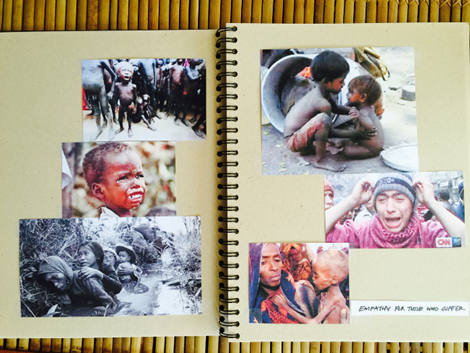
photo collage notebook to record what I have learned in my research and hope to expand this search with my friends

around the world. The attached slides, are the first batch of photos to set my course:                           
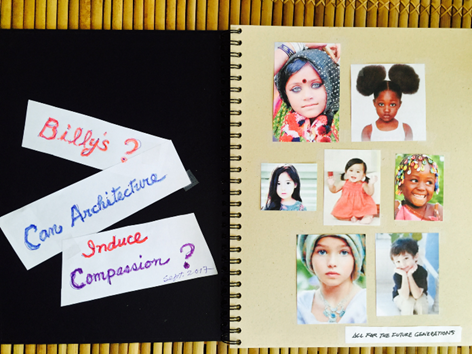
Start with Our love for children. Our innate good feelings for Humanity.

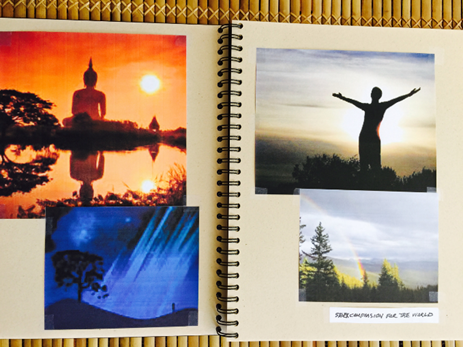
So many people today are seeking Compassion through Mindful Meditation – singularly, by two, or in groups. There are spectacular sufferings around the world due to War, Natural Disasters, Famine, Epidemics, etc. There are also deep but less spectacular sufferings –  the aged, and disabled, the homeless etc.. Even close to us, there are those who suffer from personal problems and misfortunes – few terribly stressed and some deeply distressed.  Yet, we know there are people who do care Mother Teresa, Refugee Relief soldiers, individual and group volunteers. Habitat For Humanity is a notable example. So we have Compassion and Hope, and we can find encouragement from nature, and we are so moved by the hope reflected in the eyes of those still struggling through indescribable difficulties.

But, what about Architecture Inducing Compassion?

I accept the definition of Compassion to be : “Realizing the suffering of others and then taking actions to help.”  I accept the Definition of Architecture to broadly be: “The Art and Practices in Designing Buildings”.  Indeed, in essence I think Architecture is Problem Solving, and producing Extra Magic in improving our lives and in lifting our Spirits.  Having been trained at so-called prestigious schools and professional offices, I was brain-washed to always try for the extra Magic . Where is the Poetry? 

Where is the Finesse?  Where are the Truly Beneficial Impacts – physically as well as spiritually ?

When considering the two words ‘Architecture’  and ‘Compassion’ together, I wondered if it was a ‘Chicken & Egg ‘question . It is clear that Architects produce Architecture which may or may not induce Compassion. Furthermore, the induced Compassion may only be an Inspirational Feeling which may or may not lead to actual Compassionate Deeds. I myself surely need to cultivate my inner Compassion first and hope to deliver Architecture that can induce further Compassion as result.
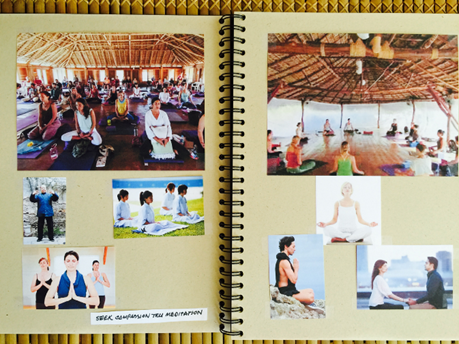
While doing some research on Meditation and Mindfulness, I discovered a Five-step Mindful Meditation from an amazing mindfulness facilitator. I was told that Mindfulness focuses on Breathing, Meditation involves Thinking, and Neuropsychology has confirmed much of the validity of her recommended methodology. Her Five-Step Exercise involves the following:

1      Proper Sitting Position/ Breathing steadily in and out/ Feel calmness / Clear your Mind

2      Continue breathing  in and out, but focus of someone who had been most kind and caring for you. Capture and enjoy this feeling of Love and Care.  That feeling is truly Golden.

3      Adjust your mind and try to transmit this Feeling of Love and Caring to someone else in your life.- best to someone you think is in need of support and compassion. Continue breathing until you feel you have delivered.

4      This time try to transmit this Feeling of Love and Caring to a small group of people – maybe members from your family, your neighborhood or community. Continue breathing in and out until you feel you have done your best.

5      Try further to reach out compassionately to an even larger group of people whom you do not even know personally – like war refugees, displaced immigrants etc. Try your best.  Practice makes perfect.

I have indeed tried this exercise and found the first three steps working powerfully. On the last two steps, I am still practicing – practicing conscientiously.
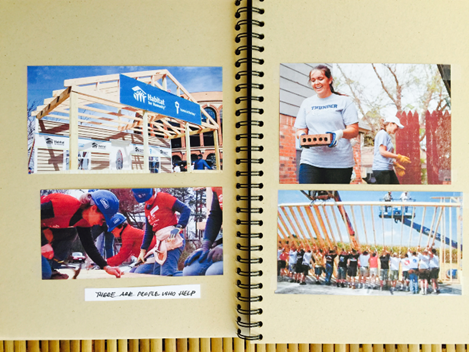
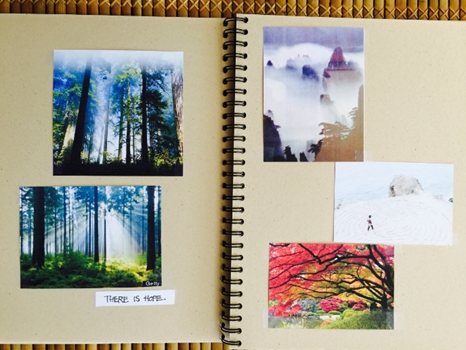
Yes, many compassionate Architects and Designers around the world are doing ‘Caring Architecture’ for the benefit of the needy.  For Children: safe and cheerful schools. For Aged and Sick: healthful accommodations.  For Communities: social connecting spaces, For the Poor: decent low cost housing. For the Cities: convenient transportation and safe parks and cultural amenities. For refugees: respectful temporary shelters. For human spirit: churches, mosques, temples etc..

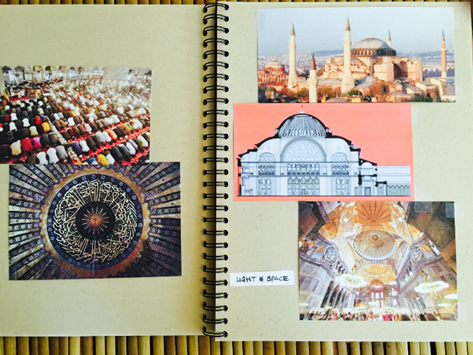
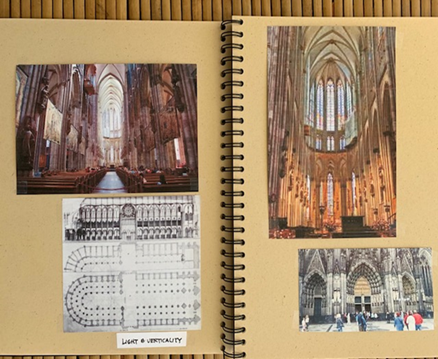
To create “Architecture which can induce Compassion”, it’s not easy ! ! !   I have selected two famous edifices here which may represent shiny examples: The Cologne Cathedral in Germany and Hagia Sophia in Istanbul, Turkey. The former represents the culture of the West. Forceful verticality initiated by pointed Gothic arches reinforce shafts of light that uplift the spirit from us tiny human figures. People pray with their eyes closed but heads lifted. Pray to God in the Sky or Heaven- ask forgiveness for Self then love for Neighbors. Hagia Sophia represents Mid-East Culture – a cross between East and West. The lofty spherical dome gives a uniting umbrella space. Rich mosaics, sparkled by spotty light openings reflect the rich variety of possibilities of Hope. People pray by the humble “five points touching the ground.” The Muslim philosophy stresses Common Wellbeing of Mankind. While the architectural styles are different, in both cases AWE is created by Exaggerated Scale and Deft Proportions.
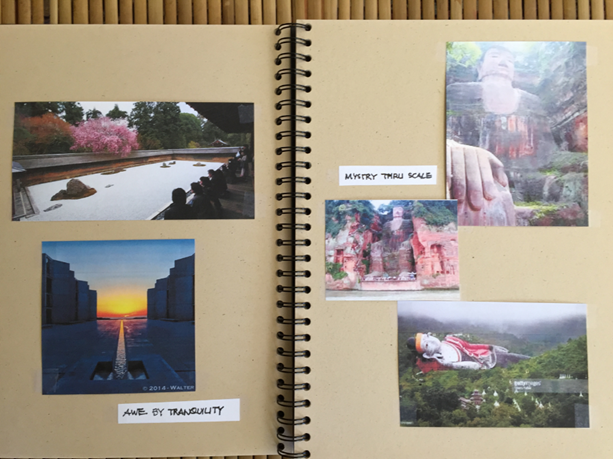
I found two examples that illustrate AWE thru Tranquility : The Zen Rock Garden in Kyoto, Japan and Salk Institute in La Jolla, Ca. USA.  In Kyoto, it’s the pure and intense Abstraction of Nature that pulls one’s heart and mind. The stillness of the rocks and sand – strategically composed –  induces the Quietness essential for Contemplation. AWE via Tranquility . Such is Zen.  The magic granite plaza at Salk Institute is actually the collaboration of Louis Khan and Mexican architect Luis Barragan. The gurgling channel of water brings life to the plaza. Pointing towards the Ocean and Sunset on the West, the magic reflection of the water gives the whole complex the reputation, ‘Temple to Nature’. It has provided Inspiration to many esteemed Salk Institute Scientists – including one very famous Neuroscientist who was especially enthralled.
______________________________________________________

I like to study the “Magic and Finesses” Architects and Designers have successfully employed. I have selected four examples here to share with you . Let’s see, where lies their Magic. What were their special Finesses?

1      I.M.Pei ‘s Miho Museum near Kyoto, Japan
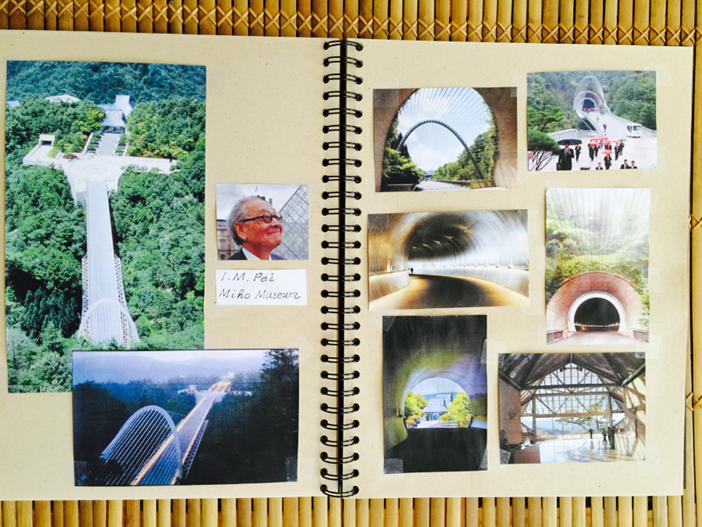
The unique Magic is the Entrance Tunnel.  As in common Meditation Practice, it’s the most important step of Clearing and Framing one’s mind to be ready to appreciate yet more important features coming.  It’s manipulation of Sequence, Pace, Time, Light, and Psychological anticipations.  Pei’s Exquisite Detailing focusing on subtle Transitioning –in this case, the web sculptures at each end of the tunnel – represent transitioning the transition. A skillful Touch !

____________________________________________________

2      Maya Lin ‘s  Vietnam Memorial, in Washington, D.C.
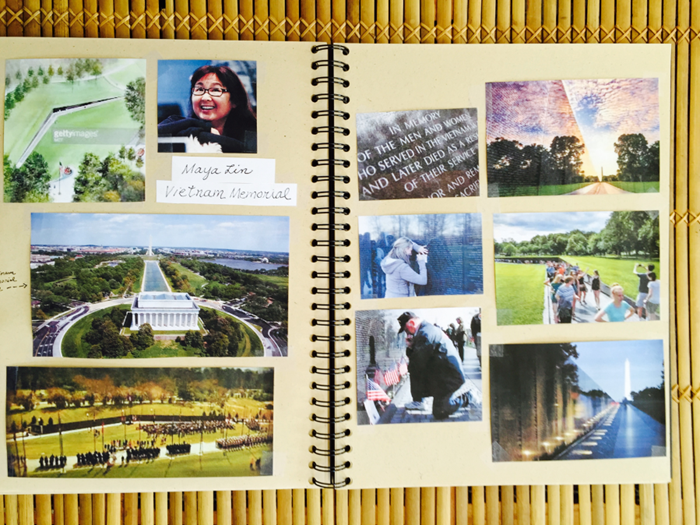
The Magic here is the simultaneous sensation of Sadness and Glory. The Finesse is in the positioning of the V-shape wall – one arm pointing to Washington Memorial Tower, the other towards Lincoln. Pressing the wall into the ground causes a sense of depression. Looking for the lost relative’s name engraved on the reflective black granite wall, one sees so many other names , and one sees Self reflected – Feeling robbed as well as Feeling Proud.

________________________________________________________

3      Carlos Scarpa ‘s Meditation Pavilion, Brion Cemetery, Italy
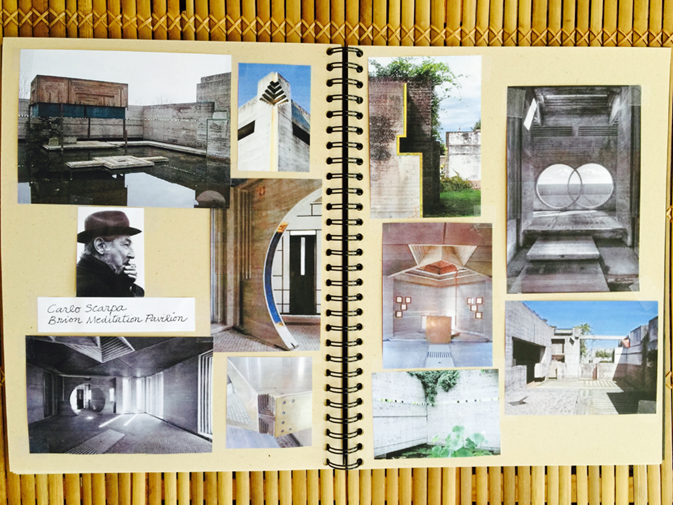
Weather streaked concrete planes cheered surprisingly by added lines and dots of mosaic tiles. Ethereal light mixed  with very earthy feeling , water lily pond and clinging vines – color Green –awakening window openingreminding of History, make this site special for Pondering Life thru Meditation.  Scarpa’s seemingly random geometric stone sculpting grab visitors firmly but gently.  Amazing Magic derives from his artful sculpting carving  and his let freed geometry. There is always a magic twist here and there.     

_____________________________________________________________

4 Michael Murphy – Mass Design Group – Boston, USA – Works in Boston, Alabama, USA & Rwanda, Africa
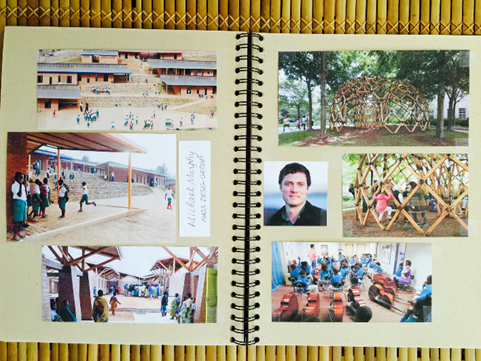
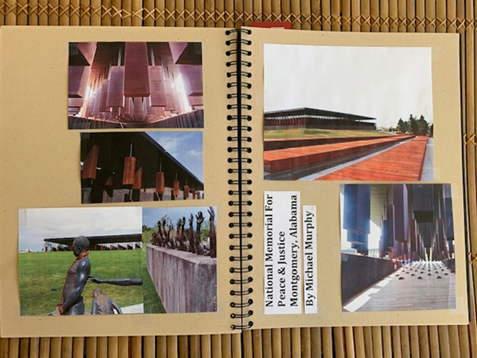
Compassion is clearly reflected in Mass Design Group’s Mission statement, their practice, and their Architecturalcreations.  Their holistic approach brings Innovation anHuman spirit together. There is an earnest interest in indigenous cultures and cross-cultural needs, aspirations and inter-connectedness. The globe-shaped pavilion in a  Bostonian Park is not only unique, and inspiring, it is beautifully detailed with Bostonian dedication.  The school and health clinic in Rwanda wisely use soft pastel colored background to sprout the residents’ more colorful attires. The soft gentleness enhances the open spaces to breath Joy & Good Health.  Where is Magic here? I believe it’s from the inner personality of this special Architect.

________________________________________________________

For us Architects to improve our general knowledge and capabilities, we should collaborate with and learn from psychologists who study environmental impacts on human emotions.  There has already been much study on Psychology of Color, of Light, of Sound, of Proximity, of Weather and Temperature, of Motions and Pace, of Lines, Shapes, Surfaces, and Symbols, on Denseness vs Sparseness, Simplicity vs Complexity, Clarity vs Confusion etc. etc. . In general, we should keep sharp our Experiential sensitivities and be able to affect people’s emotional needs via design.  The most influential Architecture Professor in my life was indeed Vincent Scully at Yale. The first assignment he gave our Architecture class was to record a morning trip from the dorm to the classroom. The first assigned reading was the famous Steen E. Rasmussen’s “Experiencing Architecture”.

Indeed, the purpose of this Special Research Exercise is not just for more learning, but to raise ‘Compassion Conscientiousness’  among all my friends – old and new.  I now earnestly propose a ‘Participatory Research and Design Process’ to engage you all on this question :“ Can Architecture Induce Compassion ?”.

All You Non Architect Friends, can you share with me :your personal inspired moments with photos, ideas, and questions?

You, Architectural Professionals, please enlighten me on any Special Design Magics and Finesses we all should know about.  

You, Psychologists Friends, we have much to learn from you. Study of Architecture truly involves understanding People –their emotions, their behaviors – your area of expertise.

You,  Architecture Students, try a design exercise on one of the following:

 1)   An interior Room or Space for Contemplation,

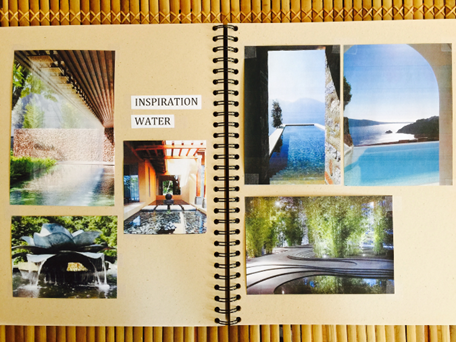
 2)   An exterior pavilion, pool, or garden for Contemplation

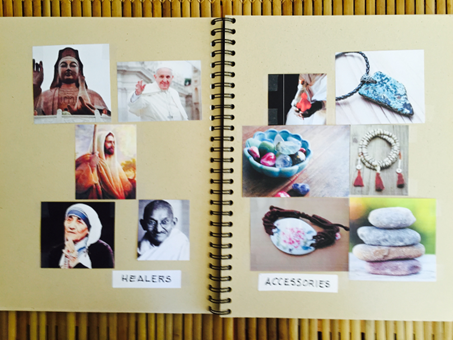
 3) An enlightening Design Object, be it a Water Fountain, a decorative ornament for your bedroom, or something to wear like a wrist-band or Necklace, etc.

Experiment with Absolute Precision and Clarity or Maze thru Haze. Find Essential Magic in different materials. Experiment with Shades of Colors and Light. Pay attention to Water, Wind, Time of the day, and Open Sky. Think and Feel Vertically, Horizontally, and Diagonally in Depth.  Find the sparks which connect to your Emotions. Find and deliver inspiration with Imagination and Finesse.
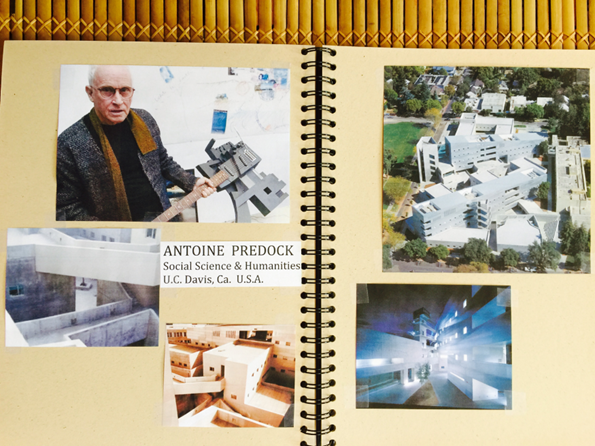
Indeed, a Non-Architect friend alerted me to a unique complex, which AIA 2006 Gold Medalist, Architect Antoine Predock from Albuquerque, New Mexico designed for UC Davis not too long ago. Nicked named, “The Darth Star”, this Social Science and Humanities Building is best known as a “Maze”. The design was purposed to be confusing. Visitors are intentionally forced to talk to someone to find out how to get to where they need to go. Often doorways you need to pass through are locked – forcing one to find alternatives. The intention was to force interactions and social connections. Supposedly, through helping each other, deeper bonding is created.  It sure is a courageous social -science experiment by the University. I admit that I have not yet visited that campus or done any in-depth social impact research on the users. I am, however, much impressed by their innovative – ‘out-of-the-box’ kind of search approach.
_________________________________________________
My SEARCH will continue, but I hope to have your help to make this a collaborative/ participatory research effort.

May I conclude my TALK today by sharing with you just a few of my main thoughts ?  I like to quote two of my favorite architects: Zaha Hadid and William McDonough.  Zaha Hadid said to us: “ Architecture should be able to Excite you, Calm you, and Make you think. “, and William McDonough, a leading architect in Sustainable Architecture, said : “ Design  is inherently Optimistic ! It is Power!”

On “Architecture Inducing Compassion”, I firmly believe that

this is an important research challenge and opportunity. Let us cultivate our personal Compassion Skills.  Commit our Will and Diligence. With Creativity and Power, we Architects, design with Compassion and Finesse!

indeed, each of us can ask, “Can my own work or profession help induce Compassion? ”

Finally, I say to you: THANKS!  – with a Handshake & Firm Squeeze; a Hug & Gentle Press; a Smile & a Well-meaning Wink, and touching my Heart with my right hand and then stretching out both arms high and wide, I wish you all, LOVE, KINDNESS, CREATIVITY & PEACE !

Cheers always !

Your Friend,

Billy William Ming-Sing Lee  李名信

Retired Architect

271 West Floresta Way, Portola Valley, Ca. 94028, U.S.A. <WilliamMSLee@gmail.com

_______________________________________________

https://friendshipology.net

___________________________________________________________
Ladera Crier Aug/Sept 2024 Inspired Intergenerational and Cross-cultural Connecting – by Billy September 2024

In one beautifully and artistically composed page with attractive photographs, Ladera Crier presented:

How a Pattern on the Sidewalk Inspired a Very Special Book “ Seeing Hearts” by Dani Chammas

One day, about four years ago, on what otherwise could have been described an “uneventful” neighborhood walk, the Chamry Sisters  ( Zeina 9, Zoe 6. and Sami 4 ) noticed a heart in cement of a sidewalk. Filled with excitement, they all took turns taking pictures of that heart.

Every day since that day, the girls have been searching for hearts throughout the world around them—at home, at school, in nature… some even in Ladera. It is not uncommon for their family activities to be punctuated by the comment, “A heart! I found a heart!” The excitement associated with these moments has persisted through time.

Wanting to share their joy with the world, the girls began collecting pictures of these hidden hearts with the dream of one day using them to create a book to inspire the world. At last “Seeing Hearts” got published and they hope it will MAKE RIPPLES  and add Beauty and Fun to our world!

_________________________________________________
Billy was so Inspired, he immediately wrote to the Ladera Crier’s Editors:

Dear Crier Team,

Thank you for publishing another inspiring issue of Ladera Crier. This time I am especially impressed by the three Chamry sisters who   co-authored “SEEING HEARTS”. It’s simply MOVING. I like to thank them and encourage them to carry on and MAKE WIDER RIPPLES around  the World as they grow older. Since I do not have their email address,  will you kindly deliver my message to them, and indeed I thank you for introducing ZZ&S to our Life in Ladera.

Dear, Zena, Zoe, and Sami,

You have added FUN, JOY, and LOVE, into my life in Ladera. This 92 year old Ladera neighbor of yours truly admires what you are doing. I wish you the very best in promoting a rippling effect around this world. I came to America from China when I was 14, and in trying to make Friends in a new country, I worked hard at how to bond with others Heart to Heart. I have made many good friends, and in fact I have kept in touch with many of my old classmates from Phillips Academy Andover and Yale College. Very recently I was mentioned in Yale Alumni Class 1955 news: It noted :

“Billy Lee sends his cheerful news: While seeking the Fountain of Youth

around the world, he accidentally fell into an Ocean of Joy, Beauty, and Love.

Yes they are all around us. Just See, Seek, Savor, and Enjoy with True Heart.”

Cheers, Hope to become your FUN OLD LADERA FRIEND !

Billy Lee-  271 West Floresta Way Portola Valley, Ca. 94028

<https;//friendshipology.net>

Indeed, Billy wishes to introduce The Chamry Sisters and their “Seeing Hearts” book to his good friends at All China’s Women’s Federation and China National Children’s Center in Beijing where years ago Billy conducted “Heart to Heart “ Friendship Connecting between children from US and China via The 1990 Institute. He thinks that Dr. Ashfaq  Ishaq , Director of ICAF ( International Child Art Foundation in Washington DC } should know about our amazing Ladera Sisters as well.

_______________________________________________

MING’S CLAMBAKE –  BUILDING A COMMUNITY of STAGE DESIGNERS – by Billy/Chat– September 2024

The first Ming’s Clambake gathering took place in 1995 at Lincoln Center in New York City. Initially conceived as an annual portfolio review for young stage designers, it was created by Ming Cho Lee, a celebrated set designer and longtime professor at the Yale School of Drama -with indispensable help from his life partner and wife Betsy. The goal of the event was to provide emerging designers with a space to showcase their work to seasoned professionals, fostering a sense of community and mentorship that spanned multiple institutions and generations of designers

The clambake’s informal setting, paired with the serious artistic discussions that took place, quickly became a favorite among participants, solidifying its place as an annual tradition that continued for more than two decades.

On average, Ming’s Clambake attracted between 100 to 200 attendees each year, consisting of both seasoned professionals and emerging stage designers. This included friends, colleagues, and students of Ming Cho Lee, many of whom were part of the broader theater and design communities. The event typically lasted for one day, often involving portfolio reviews followed by social gatherings where participants could interact informally.

The clambake brought together students and faculty from prominent design schools, most notably the Yale School of Drama, where Ming Cho Lee taught for nearly 50 years. Other institutions that regularly participated included:

  • New York University Tisch School of the Arts
  • Carnegie Mellon University School of Drama
  • California Institute of the Arts (CalArts)
  • University of California, San Diego (UCSD)
  • Northwestern University

These schools represent some of the leading stage design programs in the U.S., known for producing talented scenographers, lighting designers, and other theater professionals. The clambake created a cross-institutional platform where designers from these schools could present their work and receive feedback from industry veterans. It also involved collaboration with professional theater organizations such as the Metropolitan Opera, Guthrie Theater, Lincoln Center Theater, and the Public Theater, all of which were frequent partners of Ming Cho Lee.

The consistency of this annual event over many years helped strengthen the relationships between these institutions and foster a wider sense of community within the design world. Many participants who attended year after year developed long-term professional networks and personal friendships, cementing the clambake’s role in building a supportive ecosystem for stage designers.

Entertainment and Uplifting the Spirit:

Beyond the portfolio reviews and professional critiques, the clambake often included social elements designed to foster camaraderie and uplift spirits. These could range from live music performances, such as those by pianist Richard Lee, to readings of “Ming-isms”—witty sayings and life lessons from Ming Cho Lee that were often humorous and inspirational​.

These elements made the event not just about work, but about celebration, personal growth, and shared artistic passion.

The gatherings were known for their informal tone, creating a comfortable space where attendees could share stories and bond over food, art, and mutual admiration. Many attendees have expressed how Ming’s Clambake became a rare opportunity to step out of the pressures of professional life and simply enjoy being part of a creative community.

Yes, clams were indeed served at Ming’s Clambake, lending the event its quirky name. While the event was primarily a professional and artistic gathering, the serving of clams and other seafood became a lighthearted tradition, contributing to the casual, convivial atmosphere. The name “Clambake” was likely chosen because it evoked an image of a relaxed, communal outdoor event, where friends and colleagues come together.

General Reactions:

The reactions from attendees over the years were overwhelmingly positive. Participants often remarked on the sense of inclusivity and mentorship that permeated the event. Younger designers appreciated the opportunity to have their work critiqued in a constructive, supportive environment, while more established professionals enjoyed the opportunity to mentor the next generation. Many saw the clambake as a critical networking event, but also as a place where friendships and long-lasting collaborations were forged.

The combination of food, art, and informal dialogue helped lift the spirits of all who attended, reinforcing the strong bonds within the stage design community and creating lasting memories. The atmosphere of openness and mutual respect left many attendees feeling both inspired and rejuvenated after each gathering.

Ming’s Clambake has long symbolized a unique blend of friendship, mentorship, and creative inspiration, rooted in Ming Cho Lee’s approach to nurturing community among theater designers. The 2022 celebration at the Jack H. Scribal Center for the Performing Arts was no exception. It brought together a cross-section of Lee’s extended “family” — friends, colleagues, and students from his decades-long career in set design and education. The event was filled with moving tributes, shared memories, and reflections that celebrated not just his professional achievements but also the deep camaraderie and friendships he fostered.     For more details, you can explore the event program and related content from  PLSN Magazine and Katherine Lerner Lee

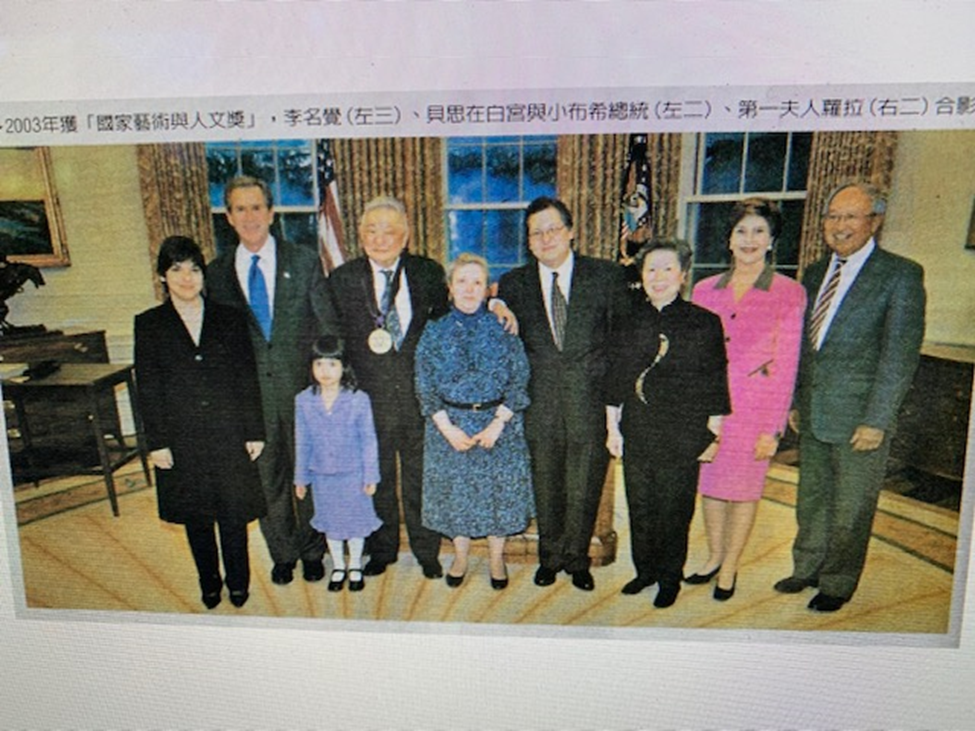
Ming Cho Lee awarded the National Arts Award at the White House  2002

________________________________________________________________

Friendships In Ladera (a small California Community)

By Mike Crisp –  September 2024

  For the past 50+ years, our family has been fortunate to live in a community that fosters friendship. We understand that we live in a bubble of educated and accomplished individuals. However, that doesn’t fully explain why our small (575 homes) community is such a special place to live. Part of the answer may be that most streets are self-contained cul-de-sacs where it is simple to organize and attend a street party. Also, a cul-de-sac makes it easy for neighbors to truly know each other.  

  Then there is the reality that because our community is self-contained (with a single entrance and exit), we have a common identity. We have a recreation center that provides a pool and bar-b-que grills, as well as tennis, bocce ball and volleyball courts. There is also a field where dog-lovers meet to exercise their pups. Also there are a series of walking paths that terminate in a small shopping center with restaurants, a coffee shop, grocery store, bank, gardening and gift shop and mailing facility. This ensures friends, neighbors and strangers will meet and interact on a daily basis. Finally, there is a community directory and email list-serve where folks can ask for help, volunteer help, donate items that are no longer needed or raise concerns that impact the community. Each month a Newsletter titled The Ladera Crier is published with the slogan, “all the news that is fun to print”. Over time, Ladera has become a melting pot of races, cultures and beliefs that has also helped strengthen the community. 

All of the above provides an environment that encourages friendship to bloom. It does not guarantee it, however. My belief is that most families select Ladera by choice, understanding the benefit of being a part of something special. If you ask people of my generation – what is more important – professional or financial status – or friendship? The answer will always be friendship. As my Dad often said, “there is no honor being the richest person in the cemetery”.  Ladera is not perfect, but for us, it has been a wonderful place to live and raise a family.

Michael Crisp Born in Kentucky. Graduate of Colgate University (1959) with a Philosophy major. Coast Guard Lieutenant (jg) (1959-62); Editor-in-Chief, McGraw-Hill (1962-69); Vice-President and Publisher, Science Research Associates (1970-85); Founder, CEO and Chairman Crisp Learning (1985-2003 )Married to Leslie (1965) – three children (Michael, Jennifer and Brooke) – 9 grandchildren.  Their favorit companion is of course their Dog , Sara – short for Serendipity.

____________________________________________________________________

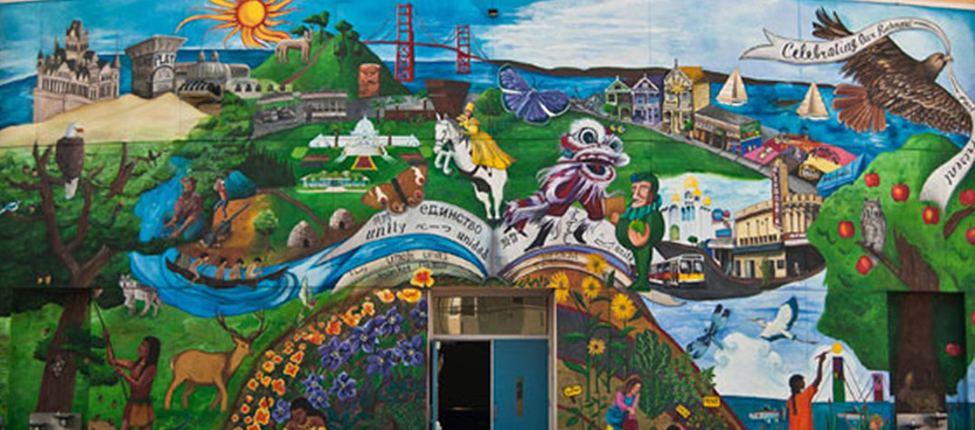
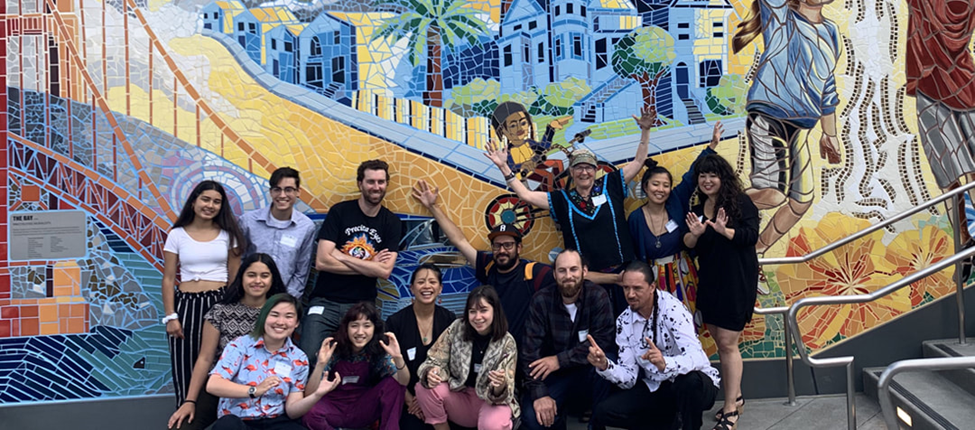
Precita Eyes Muralists – Intergenerational Friendships Formed Through Art  by Gabrielle Moreta. Sept. 2024

Recently, I was at a party hosted by one of my co-workers from Precita Eyes Muralists, when she made a joke about feeling bad for not inviting our 80-year-old boss Susan Cervantes to the party. We all laughed, thinking of how she would have gotten everyone out of their seats to dance before drinking everyone under the table. Sadly though, most of the other 20-something party goers would have found it strange that an apparently random old lady was at what was supposed to be a cool art party.

Talking across a counter recounting things from yesterday to 15 years ago. Presenting a mural proposal to the community – the lead artist is 20 and the assistant is 45. At a park, a mom and child take turns spray-painting a temporary wall. At Precita Eyes Muralists, a non-profit muralist company based in San Francisco’s Mission District, those of all ages work together every day for one specific goal – creating art. It is truly an environment where knowledge and friendship is freely exchanged, and everyone can learn something new from one another, regardless of age.

Intergenerational Friendships are the bases of all communities. Knowing how to interact with people of any age is an important skill to develop, and has sadly atrophied over the years due to the disappearances of 3rd spaces – places that people can go to that are not home or work/school. Thankfully, Precita Eyes is still a beloved 3rd space where curious teenagers and Urban Youth Art students from 10 years ago can bump into each other and talk about art together. Every day when I walk into work, I meet someone new, someone who I might have not talked to if I wasn’t in this space. Gabrielle Moreta – Assistant to Susan Cervantes

PRECITA EYES MURALISTS  an unique Community led by Susan Cervates    www.precitaeyes.org

Susan Cervantes is an influential muralist and the founder of Precita Eyes Muralists, a community-based mural organization in San Francisco, established in 1977. A prominent figure in the Chicano art movement, Cervantes has dedicated her life to creating and preserving public murals that reflect the cultural diversity, history, and struggles of marginalized communities. Her work focuses on the power of public art to inspire social change, foster community pride, and serve as a visual record of collective experiences. Cervantes has been instrumental in leading collaborative projects, teaching mural-making techniques, and mentoring artists across generations. Through Precita Eyes, she has facilitated the creation of over 400 murals, transforming public spaces into vibrant canvases that celebrate identity, heritage, and social justice

______________+______________________________________