STUDIES ON FACILITATING FRIENDSHIP DEVELOPMENT  -Billy/ChatOpenAi- 2024

Friendship can develop through various approaches, each with its own set of advantages and disadvantages. Here, we’ll discuss the pros and cons of letting friendships develop naturally, guiding them, and analytically plotting them, along with considerations of timing and effectiveness across different age groups and cultural contexts.

Developing Friendships Naturally

Pros:

  1. Authenticity: Friendships that develop naturally tend to be more genuine and resilient since they are based on spontaneous mutual interests and shared experiences.
  2. Ease: Natural friendships often require less effort and planning, making them less stressful and more enjoyable.
  3. Flexibility: These friendships can adapt more easily to changes over time, as they are not constrained by predefined goals or expectations.

Cons:

  1. Unpredictability: The organic development of friendships can be slow and uncertain, making it challenging for individuals seeking immediate social support.
  2. Incompatibility: Naturally formed friendships may sometimes result in mismatched expectations or interests, leading to potential conflicts.

Guided Development

Pros:

  1. Intentionality: Guiding the development of friendships allows individuals to focus on building relationships that align with their values and goals.
  2. Support: Structured guidance can help individuals who struggle with social skills or have difficulty making friends, providing them with strategies and support.
  3. Efficiency: Intentional efforts can accelerate the formation of meaningful connections, which can be particularly useful in specific settings, such as team-building in workplaces or new social environments.

Cons:

  1. Artificiality: Guided friendships may feel forced or insincere, potentially undermining the depth and authenticity of the relationship.
  2. Dependence: Over-reliance on guidance can hinder the development of independent social skills, making it difficult for individuals to form friendships without external help.

Analytically Plotted Friendships

Pros:

  1. Strategic: Analytical approaches can optimize the process of making friends by identifying common interests, compatible personalities, and shared goals.
  2. Predictability: These methods can provide more predictable outcomes, helping individuals form connections that are likely to be stable and fulfilling.
  3. Goal-Oriented: This approach can be particularly effective in professional or academic settings where specific objectives, such as networking or collaboration, are important.

Cons:

  1. Overthinking: Over-analyzing friendships can lead to stress and pressure, making interactions feel more like transactions than genuine relationships.
  2. Limited Spontaneity: This approach may limit the spontaneous and joyful aspects of making friends, reducing the overall enjoyment of the process.

Timing and Effectiveness Across Age Groups

Children and Adolescents

  • Natural Development: Highly effective due to the abundance of social opportunities in school and play environments.
  • Guided Development: Useful for children who struggle with social skills or experience bullying; parental or educational guidance can foster healthier friendships.
  • Analytical Approach: Less common but can be beneficial in structured activities like clubs or sports, where common interests are a focal point.

Young Adults

  • Natural Development: Effective in college and early career stages, where social opportunities are plentiful.
  • Guided Development: Helpful in new environments, such as moving to a new city, where social networks are initially limited.
  • Analytical Approach: Can be advantageous in professional settings or for networking purposes.

Middle-Aged Adults

  • Natural Development: Can be more challenging due to busy schedules and established routines but remains valuable for forming deep, lasting connections.
  • Guided Development: Community groups, hobby clubs, and workplace initiatives can support friendship development.
  • Analytical Approach: Effective for targeted networking or finding friends with specific shared interests.

Older Adults

  • Natural Development: Important for maintaining mental and emotional health, though opportunities may be fewer.
  • Guided Development: Senior centers and social programs can facilitate new friendships and combat loneliness.
  • Analytical Approach: Useful for finding companions with similar life experiences or health conditions.

Cultural Considerations

  • Individualistic Cultures: Natural development is often emphasized, but guided and analytical approaches can be useful in structured environments like workplaces or educational institutions.
  • Collectivist Cultures: Guided development is common, with a focus on family and community involvement in forming friendships. Analytical approaches may be used in organized community activities.

Conclusion

The most effective approach to developing friendships can vary widely based on individual circumstances, age, and cultural context. Balancing natural interactions with guided and analytical efforts can help foster meaningful and lasting friendships across different stages of life and social settings.

ChatGPT: Several experts and scholars are widely recognized for their contributions to the study of friendship and social relationships across various disciplines. Here are a few notable figures:

Sociology

  • Robert D. Putnam: A political scientist and sociologist known for his work on social capital and the decline of community in America, particularly in his book “Bowling Alone: The Collapse and Revival of American Community.”
  • Nan Lin: A sociologist who has extensively studied social networks and social capital, contributing to our understanding of how social connections impact individuals and communities.

Psychology

  • Robin Dunbar: A British anthropologist and evolutionary psychologist known for Dunbar’s Number, a theoretical cognitive limit to the number of people with whom one can maintain stable social relationships.
  • John Cacioppo: A pioneering social neuroscientist who studied the effects of loneliness and social isolation on mental and physical health.

Philosophy

  • Alexander Nehamas: A philosopher who has written about the role of friendship in the good life, exploring its significance in both ancient and contemporary contexts.
  • A.C. Grayling: A philosopher who has discussed friendship within the broader framework of ethics and human flourishing.

Neurology and Neuroscience

  • Tania Singer: A neuroscientist known for her work on empathy and social cognition, exploring how the brain processes social relationships.
  • Matthew Lieberman: A social neuroscientist who has studied the neural basis of social connection and its importance for mental health.

Biology and Evolutionary Studies

  • Sarah Blaffer Hrdy: An anthropologist and primatologist who has explored the evolutionary basis of cooperative behavior and social bonding in humans and other primates.
  • Frans de Waal: A primatologist known for his work on the social behavior of primates, including friendship, cooperation, and empathy.

Interdisciplinary Studies

  • Julianne Holt-Lunstad: A psychologist who has conducted extensive research on the impact of social relationships on health, including the effects of loneliness and social isolation.
  • Daniel Goleman: Known for his work on emotional intelligence, Goleman has also explored the role of empathy and social connections in personal and professional success.

These experts represent a range of perspectives and approaches to studying friendship, from its evolutionary origins and neurological underpinnings to its psychological and sociological implications. Their work continues to shape our understanding of the complex and multifaceted nature of socia

______________________________________________________
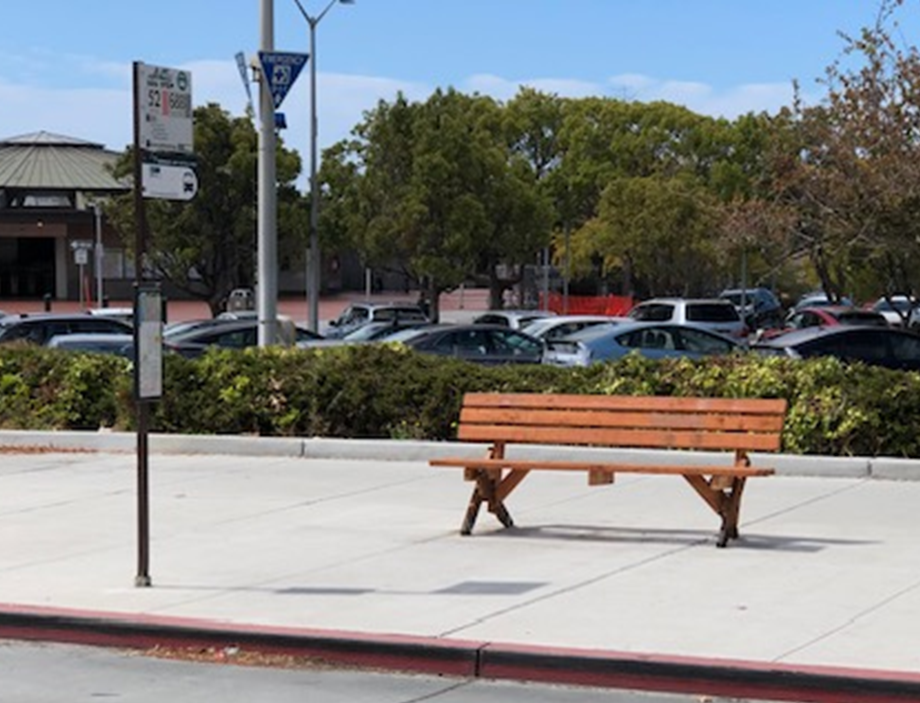
ANONYMOUS FRIENDSHIP by Joe McBride – Sept. 2024

Anonymous friendship is taking place in Berkeley and Oakland, California where Mingwei Samuel and Darrel Owens have built and installed 16 wooden benches at bus stops where no benches were present. This anonymous act of friendship has provided a place to sit while waiting for a bus. Undoubtably, Samuel and Owens have made countless unknown friends who now have a place to rest while waiting for a bus. The benches are crafted out of wood, stained, and installed by bolting them to the sidewalk by the two men. Although the city of Berkeley has objected to the installment of the benches. It has only removed one bench.

This project has caused me to think about acts of anonymous friendship I might preform. I am not a carpenter who could help to build more benches with Samuel and Owens, but I can smile and say hello to strangers as I walk along the sidewalk in my neighborhood. I could take a few of my many books and put them in the book boxes I see along streets where I live. Try to think of something you can do anonymously to spread friendship.

Welcome, FRIENDS, let’s sit and chat while waiting for the bus !

A List of Things – Inspiration Struck at 5:30 This Morning – J. Luce – 15 Sept 24

The creeping warmth of the rising sun on a cold December dawn

Walnut sprinkles descending on a sundae, joined by an eager spoon

The thrill and delight when a thrush bursts spontaneously into song

The joy of standing in a long hot shower while singing a happy tune

The wisdom to be gentle when teaching children right from wrong

Hiking in a forest green…the mossy leaves below…above, a brilliant moon

Giving rather than taking

Mending rather than breaking

Healing rather than aching

Progressing rather than braking

One hand making a friendly shake, while two can make a loving hug

Strangers becoming friends while fixing up their neighborhood

Foamy, frothy, creamy, bubbly chocolate as it’s pouring into your mug

This is but a tiny list of the myriad of things that are truly Good

One can do good, be good, and feel good, but these are not identical

When analyzing one’s behavior, it’s always smart to stay a bit skeptical

Do unto others as you would have done unto you?

Nay. Rather do unto others as they would have done unto themselves

After all, what’s good for a goose may not be good for a gander, it’s true

Life is not a rainbow, rather it’s an abundant array of fascinating pastels

The good and the wise lead quiet lives.

Euripides

SECRET ON HOW TO RELAX is important in FRIENDSHIPOLOGYBilly – September 2024

In “ RELAX AND THE WORLD RELAXES WITH YOU”, James Luce  wrote to Billy: “ I finally learned how to RELAX.”

Billy immediately urged:  Please share your SECRET ON HOW TO RELAX.>What were your ANXIETIES to begin with ? Did you do MINDFUL MEDITATIONS ? Did you have an AH HA MOMENT ? Did you have to make certain SACRIFICES ? Have you also learned HOW TO STAY RELAXED ?

James Replied:

Hello Billy,  You ask, what is my secret of how to relax…

It’s important to distinguish between being relaxed and being apathetic. Additionally, one can be excited, even agitated, and yet still be relaxed.

          My peculiar road to relaxation began one day about fifteen years ago when I suddenly realized that worry is a waste of time and is also totally unproductive. Of course, worry should never be confused with planning, anticipating, analyzing. 

          Somewhere further down that road, maybe five years ago, I realized that being concerned about things over which I had absolutely no control was just as silly as worrying. This led me to the corollary realization that the only things I could do anything about were local.  That places the news of the world into a bottle to observe, not a monster with which to do battle.  That concept also allows one to focus on real problems and real solutions…because the problems are in one’s face, urgent, and usually fixable by oneself or often “with a little help from my friends.

          The latest stride down my road to relaxation, coincident with my heart valve replacement, is the realization that worry is not just a simple waste of time, but is actually a terrible waste of very valuable time. All the more reason to eschew worry and, instead, embrace life and friends in a relaxed fashion

Stephen Lee chimed in:

Hello Bill and James, Here are my personal answers.

SECRET ON HOW TO RELAX.

What were your ANXIETIES to begin with ?                                                     Uncertainty of what may happen outside of my expectations

Did you do MINDFUL MEDITATIONS ?  Not as a scheduled daily activity but occasional reminder to myself to slow down and center my mind and be calm and introspective 

Did you have an AH HA MOMENT ?  Yes, not very often or intense. Rather a flash of thoughts which trigger my sense of creative speculation about my topics of interest.

Did you have to make certain SACRIFICES ? Yes, but I generally don’t use the word sacrifice but trade-off. Sacrifice tends to mean self sacrifice. A trade-off is a simultaneous gain and loss effect on myself and another person(s).

Have you also learned HOW TO STAY RELAXED ? Yes. To stay relaxed, I need to have an environment which does not constantly present sensual stimulation in sound, visual images, vibration, smell, or breathing. Certain peaceful sounds and music and natural sceneries usually enable me to relax and stay relaxed. 

____________________________________________________

Doris Lam added her perspective:

How to Relax?

To me, to relax is not my life goal. Because somehow vibrancy in life is attractive, it means excitement, passion, motivation, potential etc. Mundane, stagnant, uneventful and stable are negative adjectives to me.

Relax by definition from dictionary is less stress, anxious and tense. Or to be less strict or rigid.

I became relaxed after being mindful of what worried me, confronting it with worst scenarios and then intellectually telling myself that I would be able to handle it thus returning to emotional state of letting go. My anxiety then became an indicator of how well I succeeded in relaxing. Generally, my anxiety did not stay very long; I vented them out which probably caused discomfort to others which led them to see me as anxious.

Lately I finally began to appreciate why others urge me to stay relaxed. Because they view relaxed as positive; I felt being too relaxed as possibly passive. I enjoyed intensity and passion.

Being older now made me accept RELAXATION as an attractive lifestyle too.

How do you address your anxiety?

Define and identify source of anxiety

Confront problem by: Finding feasible solutions- Imagining worst outcome

Evaluating own limitations and priorities (emotional stress, ability to control, worthiness, level of satisfaction, etc.)  then hoose a solution

Accept solution by handling it emotionally and letting go, not worrying about change of situation, knowing that new problems will be solved similarly.

_________________________________________________

BILLY’s Comments: So what have I learned from my three esteemed friends ?

From James:  BE RELAXED but not APATHETIC. NOT TO WASTE VALUABLE TIME ON UNPRODUCTIVE WORRIES.- VALUABLE TIME BEST BE SPENT TO EMBRACE LIFE & FRIENDS IN A RELAXED FASHION.

From Stephen: UNCERTAINTIES DUE TO EXTERNAL FORCES – BE CALM AND INTROSPECTIVE TO ACHIEVE OPTIMIZATION – PEACEFUL MUSIC  & NATURAL SCENERIES HELP-

From Doris:  ENJOY INTENSISITY IN LIFE.- RESOLVE ANXIETY INTELLIGENTLY WITHOUT WORRYING FUTILELY>

BILLY’S CONCLUSION: How about having a discussion on RELAX – PURE IDEALISTS vs. PRAGMATIC IDEALISTS

____________________________________________________

FOR FRIENDSHIPOLOGY, JAMES LUCE, PARAPHASED- ELLA WHEELER WILCOX’S THOUGHTFUL POEM “SOLITUDE” AND RENAMED IT “RELAX AND THE WORLD RELAXES WITH YOU.”FOR BILLY- SEPT. 2024

James Luce’s reply to Billy’s comment on this photo:  “Love your new “Casual Soft Look “ and Melissa’s “Comforting Approval “

James and Melissa relaxing at an ancient monastery converted to a Catalan restaurant in the foothills of the Spanish Pyrenees

Hello Billy, 

The “casual soft look” is due to the fact that I’ve finally learned how to relax. Paraphrasing and lightening up Ella Wheeler Wilcox’s too-downbeat-but-on-point poem…Solitude to:

                    “Relax and the world relaxes with you.”  

        Laugh, and the world laughs with you;

        Weep, and you weep alone;

        For the sad old earth must borrow its mirth,

        But has trouble enough of its own.

        Sing, and the hills will answer;

        Sigh, it is lost on the air;

        The echoes bound to a joyful sound,

        But shrink from voicing care.

          Rejoice, and men will seek you;

          Grieve, and they turn and go;

           They want full measure of all your pleasure,

           But they do not need your woe.

           Be glad, and your friends are many;

           Be sad, and you lose them all,—

           There are none to decline your nectared wine,

           But alone you must drink life’s gall.

            Feast, and your halls are crowded;

            Fast, and the world goes by.

            Succeed and give, and it helps you live,

            But no man can help you die.

            There is room in the halls of pleasure

            For a large and lordly train,

            But one by one we must all file on

            Through the narrow aisles of pain.

OBT, James